
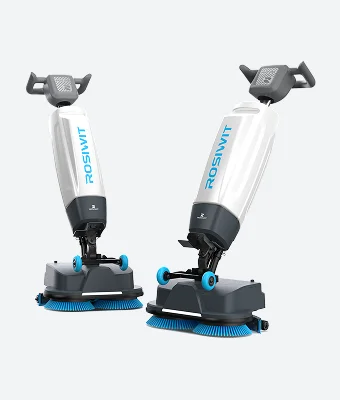
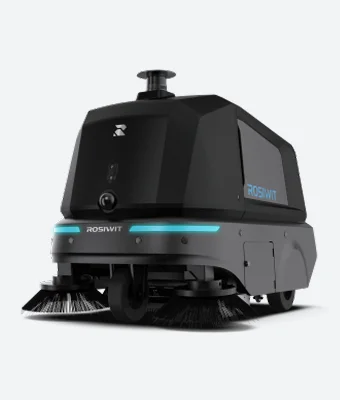

Cleaning work is becoming a larger operational issue for factories, warehouses, retail facilities, and other large sites. Floor areas are often extensive, traffic changes during the day, and cleaning may need to fit around production or customer activity. A cleaning robot gives businesses another way to organize repetitive floor-cleaning work without relying only on manually driven equipment.
From our experience in industrial and commercial cleaning, buyers now look beyond whether a machine can scrub or sweep. They also consider route planning, labor allocation, operating hours, maintenance, training, and how equipment fits into an existing site. This helps explain why robotic cleaning is receiving more attention in B2B procurement.
Why Labor Planning Is Becoming More Difficult
Manual cleaning depends heavily on available operators and working schedules. In a large warehouse, for example, cleaning teams may need to cover long aisles while forklifts and workers continue moving through the site. Production workshops can present a different problem because cleaning periods may be limited by shifts, equipment operation, or safety controls.
These conditions make consistency difficult to manage through labor alone. The issue is not simply the number of employees. Managers also need to decide when cleaning can take place, which zones need greater attention, and how to coordinate equipment with other site activities.
This is one reason businesses are considering automation. Repetitive routes can be assigned to machines, while employees remain responsible for tasks that require judgment, detailed handling, or special treatment. The goal is usually to redistribute work rather than remove people from the cleaning process.
What Automation Changes in Daily Cleaning
A robotic system changes cleaning from a mainly operator-driven activity into a planned task. Once a route and operating area are defined, the machine can carry out routine work according to its configured task. This can be useful in facilities where the same floor sections need attention every day.
Navigation and environmental perception also matter. Warehouses, production floors, and transport facilities rarely remain unchanged throughout a shift. Pallets, carts, equipment, and people may appear in different locations, so buyers need to understand how a robotic cleaning machine detects its surroundings and responds during operation.
Data adds another layer to the process. Cleaning records can help facility teams review completed tasks, operating periods, and areas covered. For managers, this makes it easier to compare planned work with actual execution instead of relying only on manual reporting.
Where Our Product Development Fits
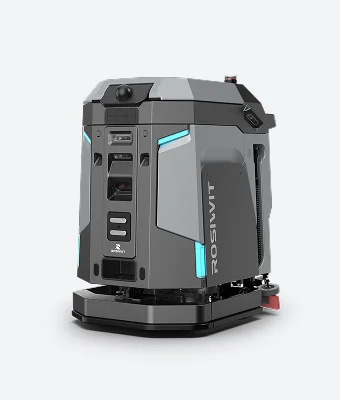
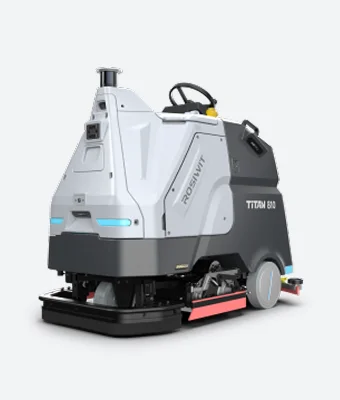
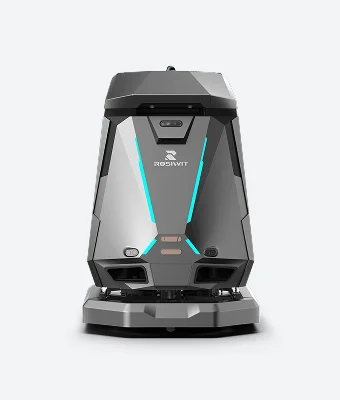
After customers define these operational needs, the next question is whether the equipment has been developed for the intended environment. At Rosiwit, we work on intelligent cleaning solutions for industrial and commercial applications, with particular attention to warehouses, production workshops, and rail transit environments.
We develop a product portfolio for varied industrial and commercial cleaning scenarios. Our work combines software and hardware so navigation, cleaning functions, machine control, and application requirements can be considered together.
For buyers, this type of product evaluation should still begin with the site. We recommend reviewing floor conditions, aisle width, traffic patterns, cleaning frequency, charging arrangements, and the way staff currently work. These details provide a clearer basis for selection than a feature list alone.
Why Dealers Are Also Paying Attention
The investment trend is not limited to end users. Traditional cleaning-equipment dealers are also seeing customers ask about automation. A distributor that already understands scrubbers, sweepers, consumables, and maintenance can use that experience when evaluating robotic products.
The sales discussion also differs from that for a conventional machine. Dealers may need to understand mapping, deployment, software operation, user training, and service procedures. Their customers may also ask how automation will work alongside existing cleaning staff and equipment.
For this reason, a cleaning robot should be viewed as part of a cleaning system rather than as an isolated device. Distributors can compare application fit, deployment requirements, service capability, spare-parts arrangements, and technical communication before adding a product to their portfolio.
What Buyers Should Calculate Before Investing
Purchase price is only one part of the decision. Buyers should first estimate the floor area, cleaning frequency, available working windows, labor arrangement, and current equipment utilization. A large site with repeated routes may have a different business case from a small facility with irregular cleaning tasks.
The operating environment also affects the result. Narrow passages, mixed pedestrian and vehicle traffic, changing obstacles, ramps, floor joints, or heavily soiled areas can influence how automation is deployed. A site survey helps engineering and procurement teams identify these conditions before equipment selection.
At Rosiwit, we also work with B2B customers and partners that already have cleaning-equipment experience. This includes end users, cleaning service providers, property-related service companies, and distributors. We focus on understanding the application first so the discussion stays connected to actual cleaning work.
A Practical Reason for the Investment
Businesses are investing in robotic cleaning because they want a more structured way to handle recurring floor-care tasks. The value comes from matching automation with the right site, route, schedule, service plan, and human workflow. It is therefore an operational decision, not simply a technology purchase.
Before choosing a robotic cleaning machine, procurement and engineering teams should define the problems they want to solve and the conditions the equipment will face. When those questions are clear, they can compare solutions on practical factors such as deployment, usability, maintenance, and long-term integration with existing cleaning operations.