

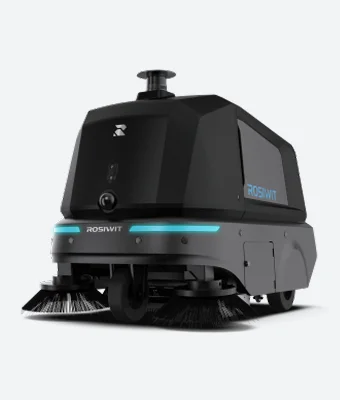

An automatic cleaning robot fits best where floors are large, foot traffic is constant, and cleaning staff are hard to keep. Supermarkets, grocery stores and shopping malls meet all three conditions. This guide covers where these robots work, what trips them up, and what to check before you buy.
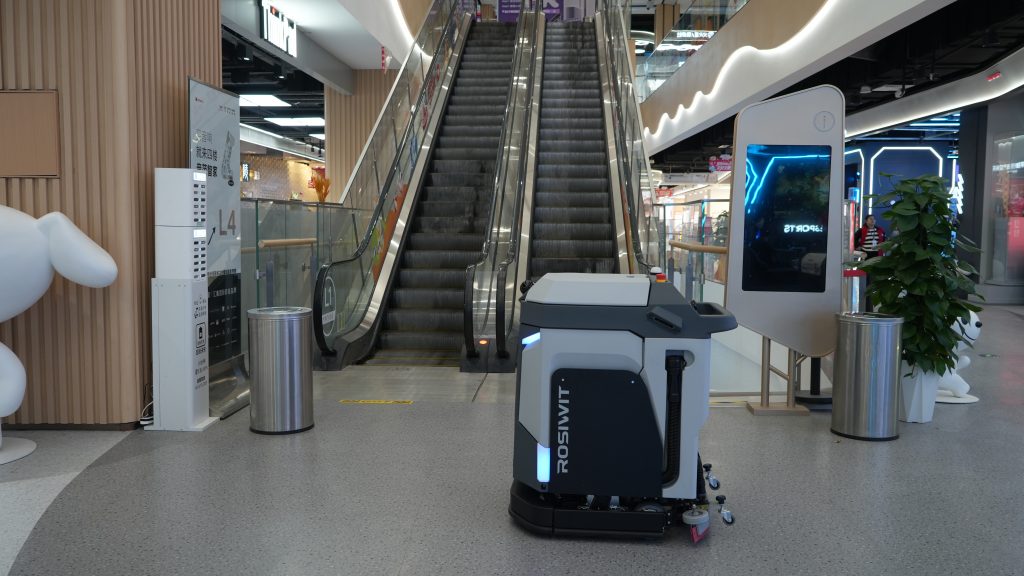
Which Commercial Facilities Benefit Most From an Automatic Cleaning Robot?
Facilities with long, open floors and fixed cleaning windows benefit most. One machine can repeat the same route every night without adding headcount.
Why Do Supermarkets and Grocery Stores Need Automated Floor Cleaning?
Because spills happen all day and aisles are long. Produce misting, dropped bottles and rain tracked in from the entrance leave wet patches that staff must find quickly. The National Floor Safety Institute (NFSI) estimates that over 80% of slip-and-fall accidents happen on wet surfaces.
A scheduled robot covers the full aisle grid while the store is quiet. As a result, staff can focus on spot cleaning and customer service.
Why Do Shopping Malls and Other High-Traffic Spaces Fit?
Because wide concourses and polished floors show every mark. Thousands of visitors may cross one mall corridor in a day, and customers judge the whole property by its floors.
Labor is the second pressure. One industry analysis, citing the Worldwide Cleaning Industry Association (ISSA) and IBISWorld, puts labor at 50–65% of operating cost in commercial cleaning. Automating repetitive scrubbing passes targets that cost directly.
| Facility | Floor problem | What the robot must handle |
| Supermarket or grocery store | Spills, wet entrances, narrow aisles | Cart and shopper avoidance, tight turns |
| Shopping mall | Wide concourses, polished surfaces | Crowd navigation, low noise |
| Department or retail store | Constant footfall, short cleaning windows | Reliable rerouting, quick servicing |
What Obstacles Make Commercial Floors Hard for an Autonomous Cleaning Robot?
Moving people and hard-to-see objects create the toughest problems. An autonomous cleaning robot must treat a shopper and a display base very differently.
How Do Shoppers, Carts and Children Change a Cleaning Route?
They force the robot to reroute in real time. A fixed route fails the moment a cart blocks an aisle or a child runs across the path.
Therefore, the robot needs sensors that track movement, not just a static map. Otherwise, it stops, waits, or bumps into things.
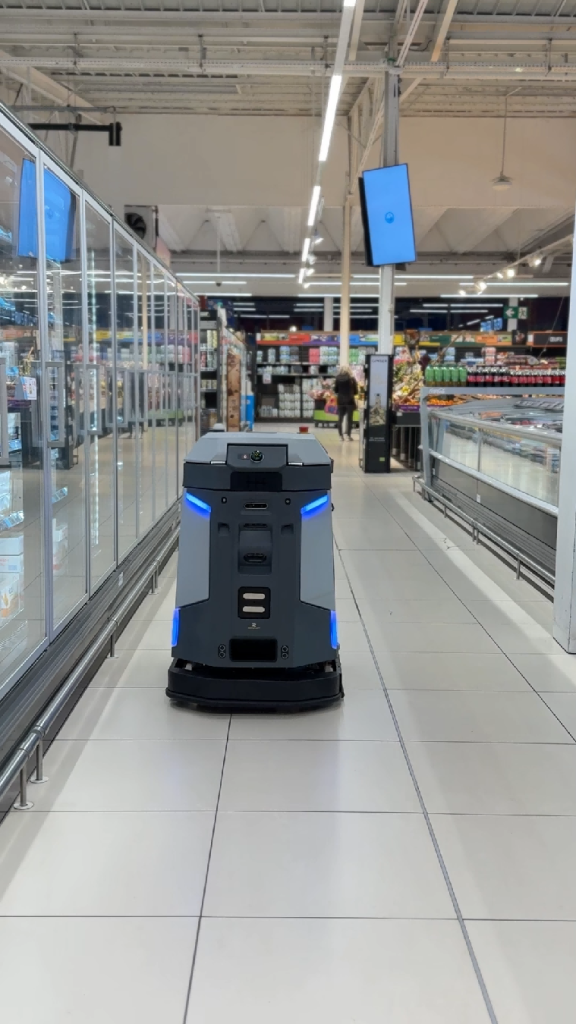
Which Obstacles Do Weaker Navigation Systems Miss?
Low-lying and suspended objects. Pallet jacks, floor displays and low shelf bases sit below some sensors’ view. Hanging signage and overhanging shelf edges sit above it.
For example, a sensor that reads only one height can miss both. As a result, the robot either clips an object or stops unnecessarily, which wastes cleaning time. Multi-sensor setups close that gap.
How Does Skywalker GT Handle High-Traffic Retail and Commercial Spaces?
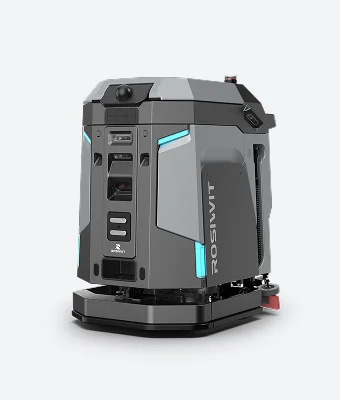
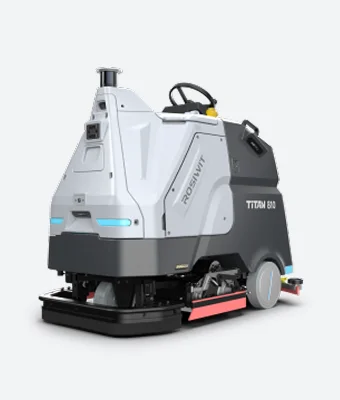
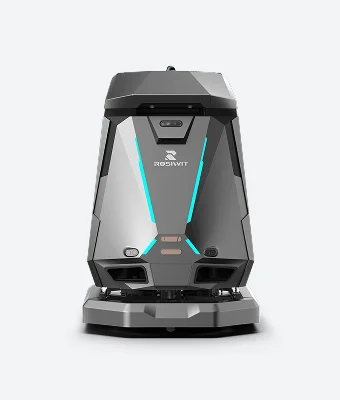
Rosiwit’s commercial cleaning robots include the Skywalker GT autonomous cleaning robot, a floor scrubber with artificial intelligence (AI)-powered navigation, built on a 48V powertrain for busy indoor floors.
How Does It Detect and Avoid Obstacles?
It combines three sensing methods. 3D LiDAR (Light Detection and Ranging), RGB-D (color-and-depth) vision and ultrasonic sensing work together to identify suspended, low-lying and moving obstacles.
Safety bumpers, anti-drop protection and emergency stops back this up. Together, these cover the blind spots described above.
What Keeps It Running During Business Hours With Minimal Labor and Noise?
Quiet operation and simple servicing. The robot runs at 60 decibels (dB), about the level of normal conversation. A 5-in-1 docking station supports fully unmanned operation.
Core components swap in 10 minutes, and consumables in 10 seconds. A 2-year warranty applies. With 33 kg of brush pressure, it scrubs tile, terrazzo and marble consistently.
| Spec | Skywalker GT |
| Sensing | 3D LiDAR, RGB-D vision, ultrasonic |
| Protection | Bumpers, anti-drop, emergency stop |
| Powertrain | 48V |
| Brush pressure | 33 kg |
| Noise | 60 dB |
| Maintenance | Components 10 min; consumables 10 sec |
| Warranty | 2 years |
How Does an Automatic Floor Cleaning Machine Compare With Manual Equipment?
An automatic floor cleaning machine wins on route consistency and labor use, while manual machines win on upfront cost. CB Insights notes that conventional ride-on and walk-behind scrubbers remain common because they cost less to buy.
| Factor | Manual ride-on or walk-behind | Autonomous |
| Upfront cost | Lower | Higher |
| Operator time | One operator per machine | Operator free for other tasks |
| Route consistency | Varies by operator | Same route each run |
| Scheduling | Needs a staffed shift | Runs on a set schedule |
What Should Contractors, Property Managers and Dealers Check Before Buying?
Check five points before you commit. Ask for a live demonstration in a busy aisle.
- Obstacle sensing:Which sensors detect low-lying and suspended objects?
- Servicing time:How long do component and consumable swaps take?
- Noise level:Is it quiet enough for opening hours?
- Floor match:Does it suit your tile, terrazzo or marble?
- Support:What warranty and parts coverage applies?
Dealers who already sell manual scrubbers can add an autonomous line to the same customers, such as retail chains and cleaning contractors.
Where Should You Start Deploying a Cleaning Robot?
Start with one high-traffic zone, such as the main aisle of a supermarket or a mall concourse. Then measure the results before you scale.
- Map the route and mark where carts, displays and pallets usually sit.
- Schedule runs for the quietest hours.
- Track cleaning hours saved and spill response time.
Contractors can price this pilot into their next bid.
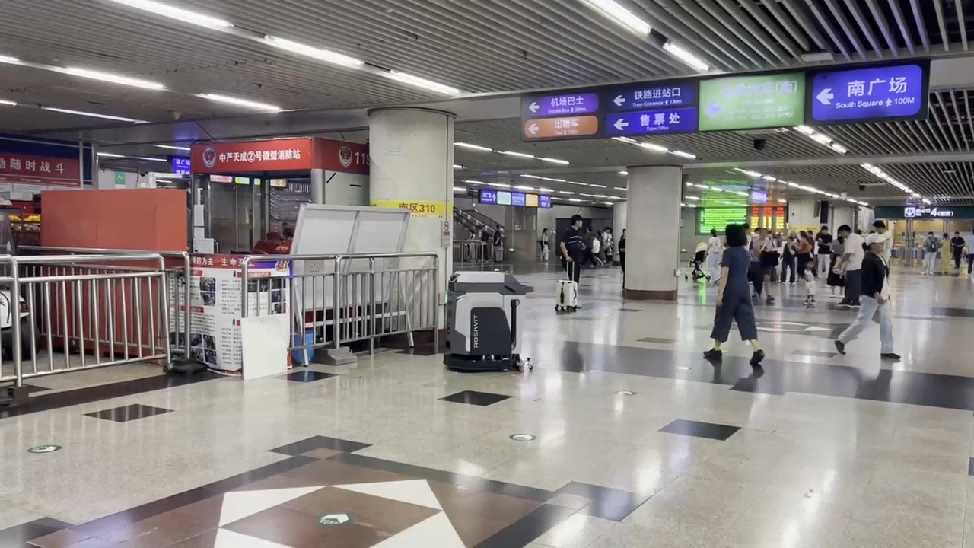
Because commercial floors mix crowds, spills and hidden obstacles, navigation quality decides success. Review the full commercial cleaning robot specifications to see how the Skywalker GT matches your sites.