

Commercial floor cleaning is moving from operator-dependent equipment toward autonomous systems that can work within changing commercial and industrial environments. Counterpoint Research reported that global commercial cleaning robot shipments exceeded 50,000 units in 2025, while AI, visual perception, 3D mapping, autonomous path planning, and obstacle avoidance are becoming core technologies in the category.
That shift matters to facility operators and distributors because buying a robotic floor cleaning machine is no longer just a question of cleaning width or battery capacity. Buyers increasingly need to understand whether a system can navigate around people and equipment, maintain a repeatable route, and provide useful operating information after deployment.
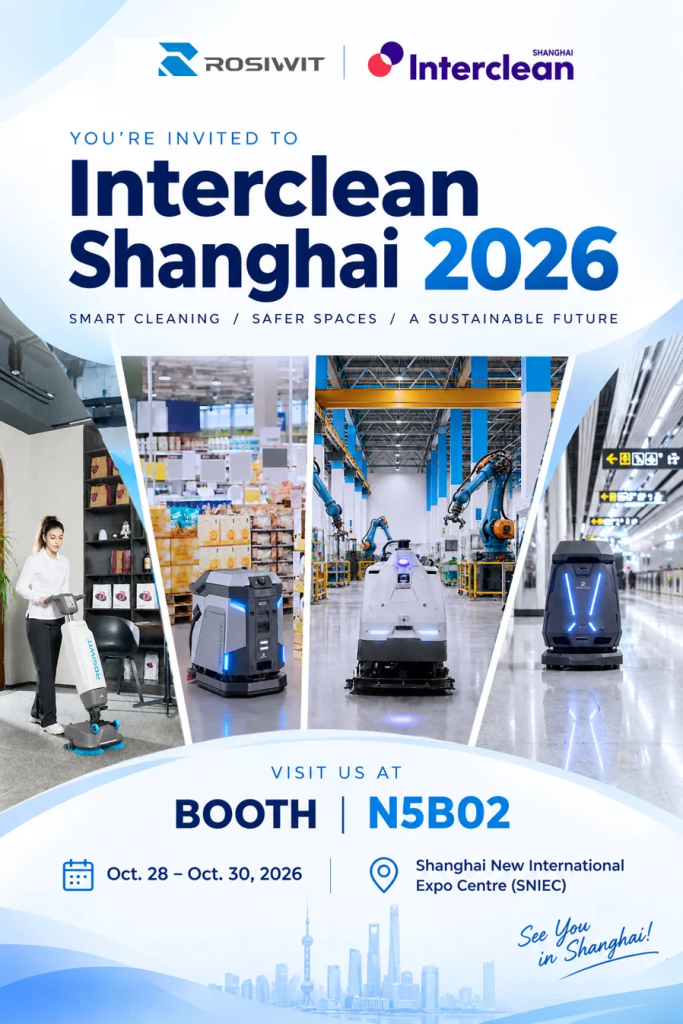
Interclean Shanghai 2026 will take place from October 28 to 30 at the Shanghai New International Expo Center. The official show describes the event as a B2B cleaning and hygiene platform covering robotics, equipment, machines, and related technologies, making it a relevant meeting point for buyers evaluating automation.
Event Information
- Dates:28–30 October 2026
- Venue:Shanghai New International Expo Center, 2345 Longyang Road, Pudong New Area, Shanghai
- Rosiwit stand:Hall N5, Booth N5B02
- Opening hours:09:00–17:00 on 28 and 29 October; 09:00–15:00 on 30 October
- On show:Skywalker GT, Titan 810, and Pilot One NEO, with live demonstrations
Why Do Commercial Cleaning Robots Need More Than Autonomous Movement?
A commercial cleaning robot needs environmental perception, reliable navigation, and decision-making in addition to basic movement. In a mall, factory, transport hub, or warehouse, people, vehicles, shelves, and temporary obstacles can change the route while cleaning is underway.
3D SLAM, or Simultaneous Localization and Mapping, helps a robot understand its position while building or using a map of its surroundings. Rosiwit’s technology information describes multi-sensor processing across cameras, LiDAR, and radar, together with AI functions for obstacle detection, semantic segmentation, and recognition of low-profile or suspended obstacles.
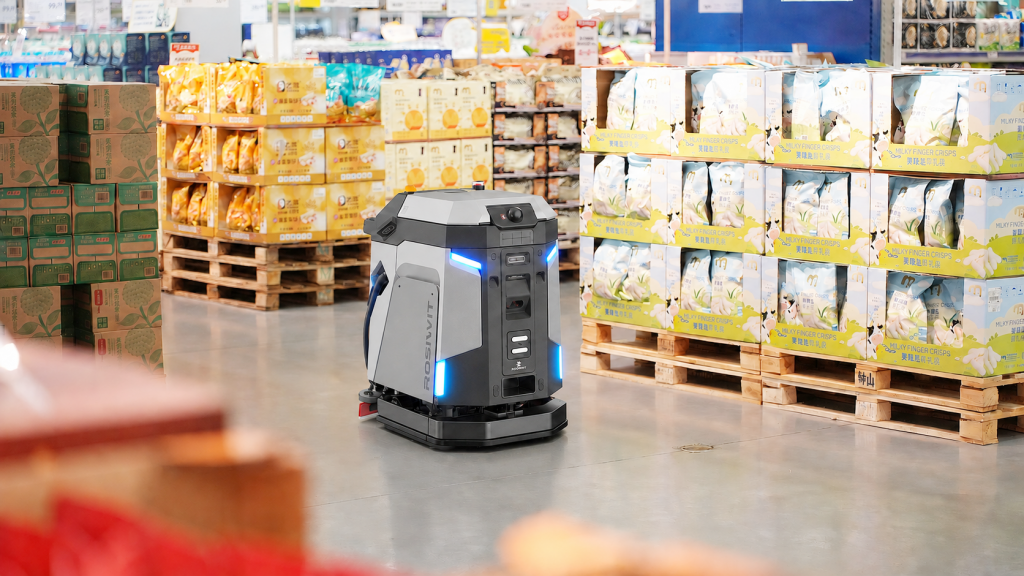
AI-powered robotics therefore has a practical role: it connects perception with navigation and action. For B2B buyers, the useful question is not whether a robot contains AI, but whether the technology helps the machine continue a cleaning task when the environment does not remain fixed.
How Should B2B Buyers Match a Robotic Floor Cleaning Machine to Their Scenario?
Rosiwit Technology Company Limited approaches smart cleaning through products designed for different operating environments rather than one universal machine. B2B buyers should evaluate a floor cleaning machines robot by the complete operating workflow rather than by a single headline specification. A useful assessment starts with the environment, then connects navigation, cleaning performance, maintenance, and management to that environment.
First, map the real obstacles and traffic patterns: forklifts, shelves, customers, workers, narrow passages, ramps, and temporary blockages. Then compare the robot’s navigation and sensing capabilities against those conditions instead of assuming that the same specification will perform equally well everywhere.
Next, examine the cleaning task itself. Cleaning width, water capacity, brush pressure, runtime, charging, and maintenance affect how much human intervention is required. Finally, check whether Digital Management can provide operational visibility after installation, because fleet-level oversight becomes more relevant as deployments grow.
For distributors, this approach also makes product positioning clearer. Instead of selling smart cleaning as a generic technology, a cleaning robot manufacturer can match a machine to a specific site, workflow, and buyer requirement.
What Does Rosiwit Bring to Interclean Shanghai 2026?
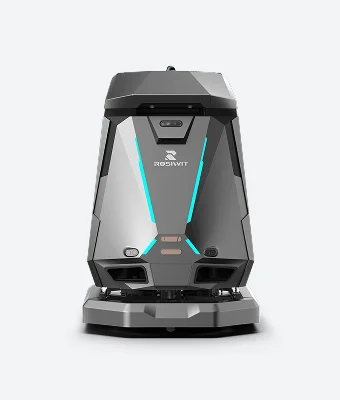
At Interclean Shanghai 2026, Rosiwit will bring Skywalker GT, Titan 810, and Pilot One NEO to Booth N5B02 for demonstrations and discussions with industry partners. The exhibition material presents the three products as part of a broader exploration of intelligent cleaning in commercial, industrial, and public spaces.
Skywalker GT: autonomous cleaning for high-dynamic spaces
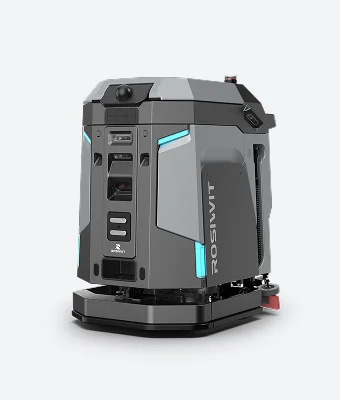
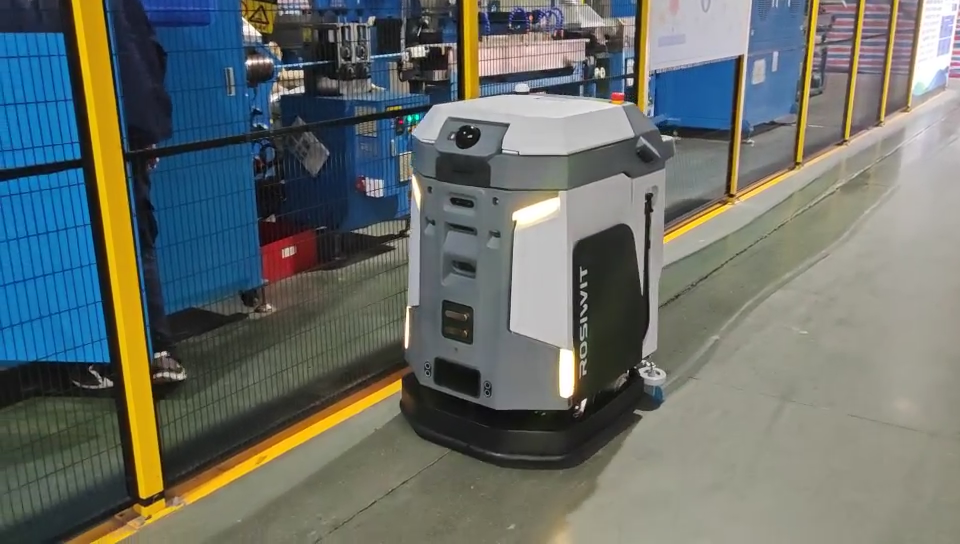
Skywalker GT is designed for high-traffic, high-dynamic environments such as malls, transport hubs, factories, hospitals, and schools. It is built on a 48V high-power platform and combines an autonomous navigation system with six layers of safety protection, supporting accurate positioning and stable operation where people and equipment move frequently.
A one-hour fast charge supports up to about five hours of continuous scrubbing, and operating noise is as low as 60 dB, which helps reduce disturbance in crowded public spaces. For maintenance, roller and disc brushes can be removed and refitted in about 10 minutes, consumable parts can be replaced in as little as 10 seconds, and the machine carries a two-year warranty. Skywalker GT has also won a 2026 Red Dot Design Award.
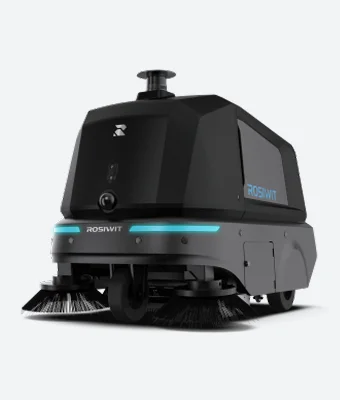
Titan 810: a fully automatic scrubber for large industrial areas
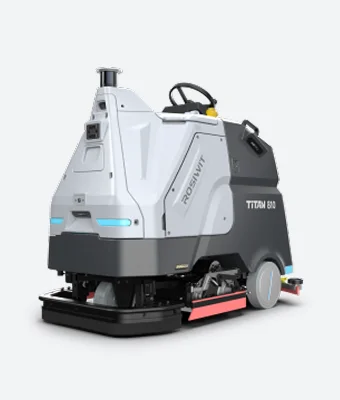
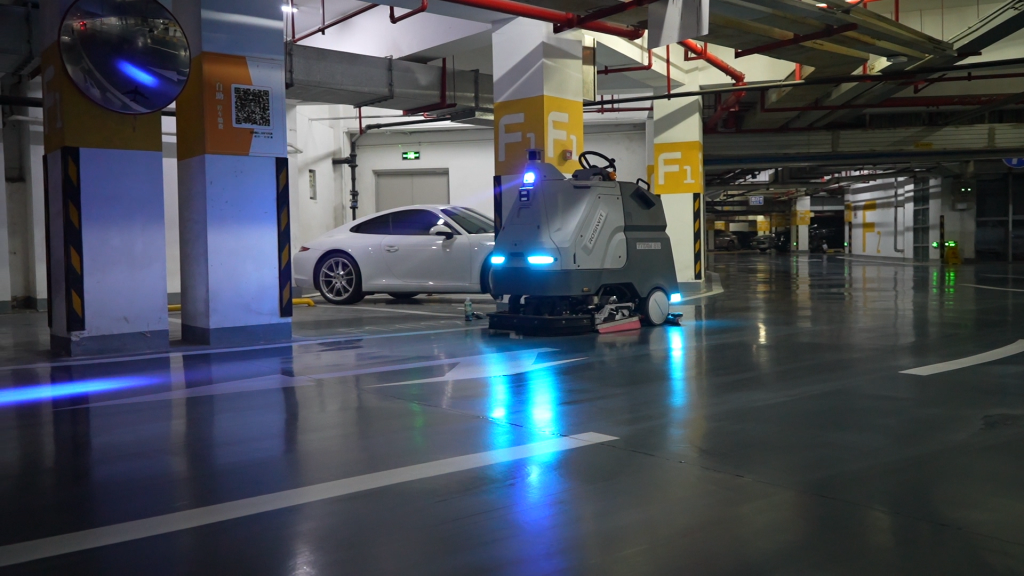
Titan 810 targets warehouse and logistics centers, industrial plants, large warehouse-style stores, and underground car parks, where manual operation and scheduling are costly. It is a fully automatic scrubber with an 81 cm cleaning width, an NVIDIA 100 TOPS computing chip, and an autonomous navigation system, intended for conditions such as forklift traffic, dense shelving, and changing routes.
Cleaning efficiency reaches up to 5,200 ㎡/hour. A 115 kg brush-deck downforce and brush speed of up to 600 rpm are designed for stubborn dirt and oil in industrial settings. The machine climbs 65 mm obstacles and 11° (20%) slopes, powered by a 1,000 W motor.
Its 5-in-1 smart workstation integrates automatic water filling, automatic draining, automatic charging, intelligent cleaning-liquid proportioning, and a high-pressure water gun, so the robot can complete a full work cycle on its own. Continuous scrubbing lasts up to about six hours. Rosiwit’s product page also describes cloud-based monitoring and Digital Management through Rosiwit 365, which lets operators view cleaning information remotely.
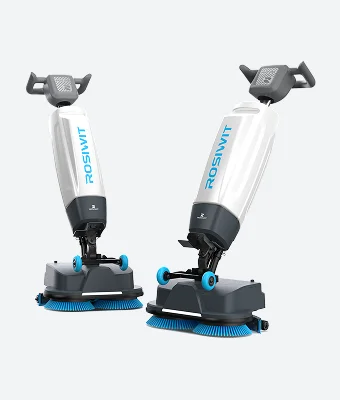
Pilot One NEO: a compact indoor scrubber-dryer
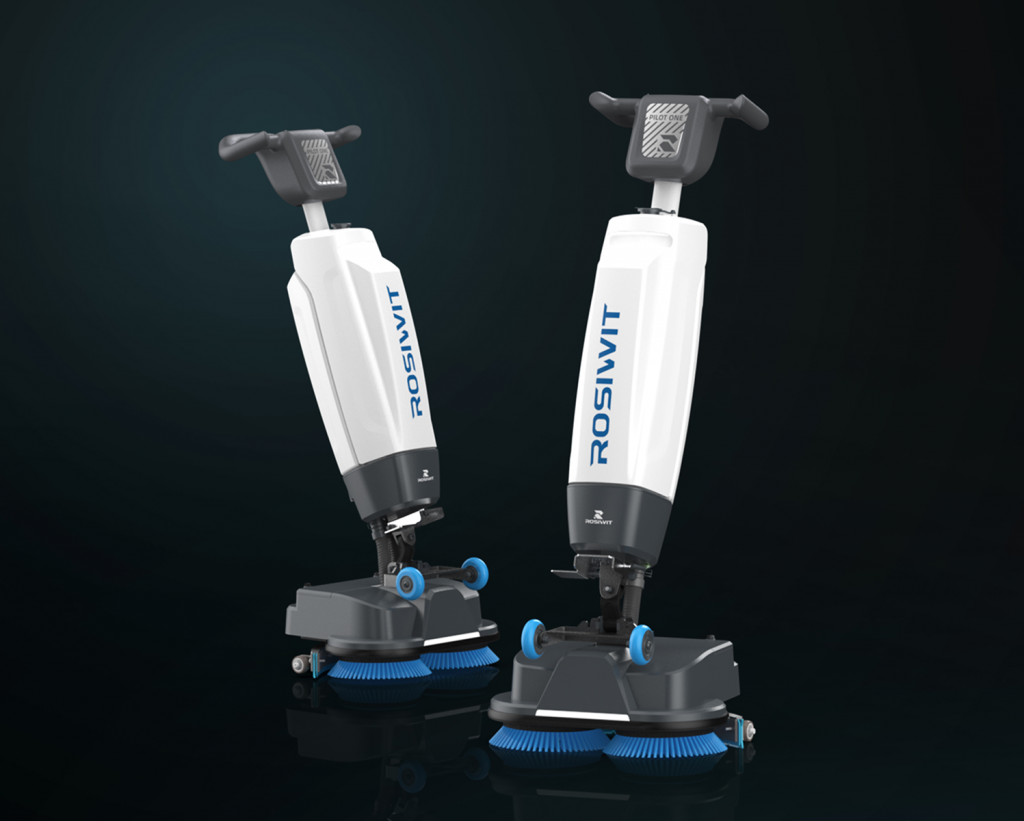
Pilot One NEO is a compact, operator-guided electric walk behind floor scrubber designed for high-traffic spaces such as malls, restaurants, restrooms, and gyms. Featuring up to 300 RPM scrubbing and instant drying, it delivers a cleaning efficiency of up to 1,200 m²/h—three times that of traditional cleaning tools in the product comparison. Its 430 mm cleaning width, 90-minute maximum runtime, and 5L solution tank support efficient daily cleaning. An ergonomic design reduces operator effort by up to 50%, while 360-degree rotation and a self-standing structure simplify cleaning in narrow spaces. Visitors can experience Pilot One NEO firsthand at the booth and discuss its suitability for their facilities.
Conclusion: What Can Smart Cleaning Add to B2B Facility Operations?
Smart cleaning can add value when robotics, cleaning hardware, and digital management are treated as one integrated solution rather than as isolated features. The strongest use case is not simply replacing a person walking behind a machine; it is creating a more repeatable and measurable cleaning workflow.
Rosiwit’s Interclean Shanghai 2026 presentation reflects this direction, from high-traffic commercial spaces to large industrial sites and from autonomous cleaning to operational management.
For procurement teams, facility operators, and distributors, the practical next step is to evaluate the complete workflow: where the robot operates, what it must perceive, how it cleans, how it is maintained, and how performance is monitored. That is where smart cleaning becomes a business solution rather than simply a robotic floor cleaning machine.