
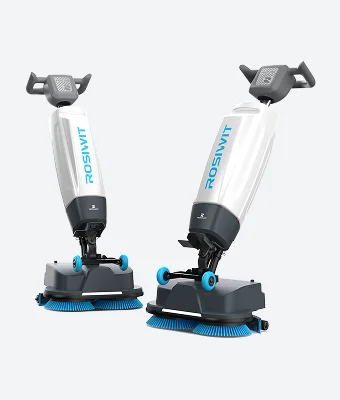
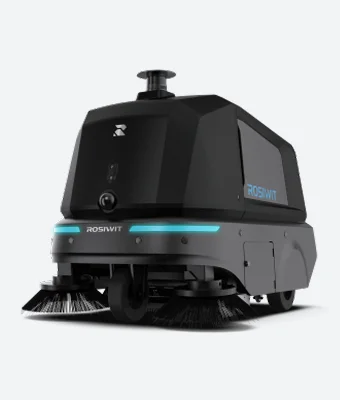

Facility managers evaluating automated floor maintenance technology face an overwhelming landscape of technical specifications and operational claims. Choosing an effective commercial autonomous floor cleaner requires analyzing fundamental engineering attributes rather than relying solely on high-level promotional claims. Smart investment decisions depend on evaluating critical capabilities such as navigation stability, battery endurance, brush deck pressure, and data integration.
Sensor Fusion Technologies
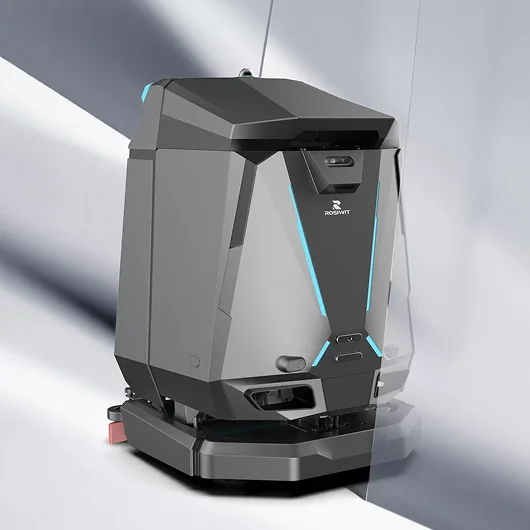
Navigating modern indoor facilities demands robust spatial perception. Modern autonomous floor cleaners rely on multi-sensor architecture, combining LiDAR, visual sensors, and ultrasonic modules to construct accurate environmental maps. High-precision 3D SLAM systems process dynamic physical surroundings, ensuring continuous operation even when obstacles or human traffic shift unexpectedly. Relying on a single sensor type often leads to navigation failures in complex layouts. Multi-sensor fusion provides the spatial redundant data necessary to maintain steady, uninterrupted routes across expansive floors.
Advanced processing hardware enables instant recalculations when unexpected barriers appear. Real-time AI acceleration allows the onboard system to adapt instantly, preventing sudden stops or dynamic routing errors. At Rosiwit, we design algorithm suites focused on optimizing computational energy, ensuring hardware responsiveness remains high without draining primary power reserves.
Operational Runtime Optimization
Power management directly impacts daily productivity and labor planning. Lithium-ion chemistry remains the standard for industrial floor equipment, offering superior discharge efficiency and cycle life compared to legacy options. Fleet supervisors must evaluate usable running time alongside total battery capacity to determine real-world performance. Extended runtimes ensure large square footage gets covered in a single operational window without mid-shift recharging delays.
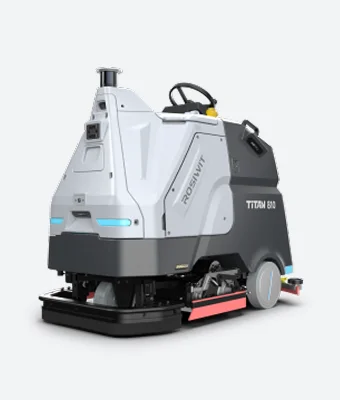
Fast-charging capabilities transform how automated equipment integrates into round-the-clock facility schedules. Units capable of full recharges in short windows minimize idle time, enabling flexible deployment strategies across peak and off-peak hours. The Titan 810 autonomous floor cleaner demonstrates this operational balance, pairing an impressive 6.5-hour ultra-long battery life with high-capacity scrub systems to maximize square-meter coverage per shift.
Mechanical Down Pressure Dynamics
Effective scrubbing performance depends directly on mechanical force applied to floor surfaces. Scrubbing decks must generate sufficient downward force to lift stubborn grime, industrial grease, and embedded particulate matter without damaging floor coatings. Adjustable down pressure allows operators to tailor cleaning intensity to specific surfaces, ranging from sensitive polished concrete to heavy industrial resin floors.
Mechanical stability under heavy loads prevents uneven brush wear and guarantees uniform surface treatment. Heavy-duty actuation systems maintain consistent contact pressure across wide scrubbing paths, ensuring steady performance throughout the life of the brush. High-torque drive motors complement this down pressure, keeping scrubbing decks spinning at optimal speeds even when encountering high friction or sticky residue build-up.
Fluid Capacity Balance
Solution tank capacity dictates how long a unit operates before requiring human intervention. Imbalanced recovery and solution tanks force frequent stops to drain wastewater or refill fresh water, bottlenecking operational output. Optimizing fluid capacity ratios ensures that battery runtime and water usage align well during continuous cleaning runs.
Intelligent liquid management systems control water flow based on operating speed and floor condition. Regulating water deployment prevents excess liquid pooling on walkways, accelerating floor drying times and improving overall facility safety. Dedicated double water tank designs maintain clear separation between clean solution and extracted slurry, preventing cross-contamination during intensive scrub cycles.
Software Management Integration
Modern facility operations depend on transparent telemetry and fleet management tools. Digital management software gives operations managers clear visibility into active cleaning routes, total coverage metrics, and real-time machine diagnostics. Centralized dashboards consolidate operational data, transforming raw performance metrics into actionable maintenance and scheduling insights.
Remote monitoring features allow fleet administrators to track consumable usage, predict maintenance needs, and review detailed operational logs from any location. Cloud-connected hardware continuously syncs performance metrics, highlighting operational bottlenecks before they cause downtime. By tracking daily system usage, facility teams optimize labor allocation and streamline long-term asset management.
Environmental Mapping Precision
Creating detailed floor maps serves as the foundation for efficient automated cleaning. High-precision mapping software scans vast industrial footprints, accurately identifying fixed walls, temporarily stored inventory, and narrow pedestrian lanes. Precision mapping prevents overlap errors, saves operational energy, and guarantees thorough edge-to-edge floor coverage.
Extensive facilities demand mapping capabilities that adapt effectively to spatial shifts. Industrial environments change constantly as inventory moves and layouts reorganize. Advanced mapping software accommodates these dynamic adjustments, allowing operators to update route boundaries and restricted zones without building entire site maps from scratch.
Specialized Scenario Adaptability
Commercial facilities present varied architectural challenges, from tight transit corridors to wide warehouse aisles. Deploying an adaptable cleaning robot allows facility teams to address specific environmental demands without changing core operational workflows. Compact chassis designs maneuver around tight obstacles, while wide-deck industrial platforms cover massive logistics footprints efficiently.
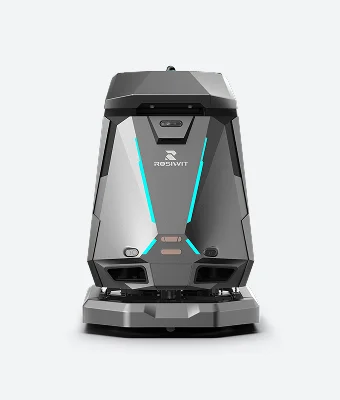
Evaluating physical footprint, turn radius, and climb gradient ensures the selected platform handles specific architectural features smoothly. The Skywalker 50 autonomous floor cleaner balances compact mobility with robust scrubbing power, making it ideal for high-traffic environments like transit stations and public halls. Selecting hardware built for dynamic space layouts reduces manual intervention and preserves floor quality across diverse operational zones.
Automated Station Integration
Fully autonomous workflows require minimal manual intervention during routine servicing tasks. Docking stations automate basic maintenance procedures, including battery charging, water replenishment, and wastewater drainage. Implementing an automated workstation transforms a standalone cleaning robot machine into a self-sustaining asset capable of operating during off-peak hours or overnight shifts.
Docking accuracy relies on precise positioning sensors that guide equipment safely into service stations. Robust mechanical connections ensure leak-free fluid transfers and secure electrical contact during rapid charging cycles. Streamlining these daily service tasks reduces manual labor requirements, allowing facility staff to focus on high-value operational priorities.
Conclusion
Selecting autonomous floor care technology requires systematically evaluating navigation capabilities, mechanical design, power efficiency, and digital oversight tools. Aligning these technical parameters with specific facility requirements helps managers build efficient, repeatable cleaning processes across any commercial footprint.