
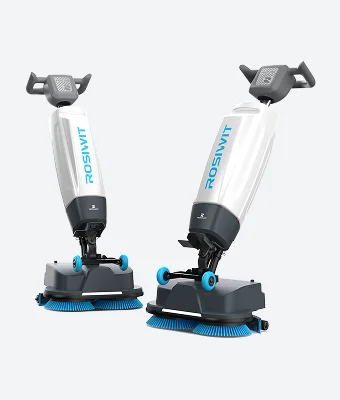
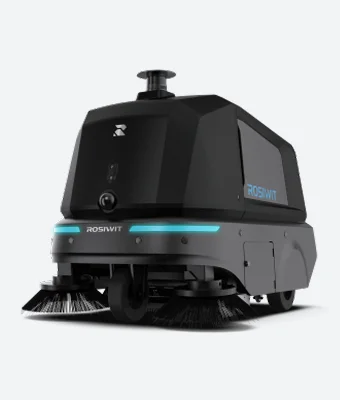

Selecting autonomous floor maintenance systems requires evaluating core sensor architecture, hardware reliability, and navigation safety rather than focusing purely on surface coverage rates. Operations teams must assess how autonomous machinery handles real-world spatial hazards while maintaining consistent cleaning cycles across busy properties.
Deploying a commercial cleaning robot allows modern facilities to standardise floor maintenance routines without increasing manual labor overhead. Here at Rosiwit, we build automated sanitation platforms engineered to address these complex operational challenges.
Varying architectural layouts require multi-layered sensory suites to prevent collisions and service interruptions. Combining LiDAR, ultrasonic units, and visual sensors creates a comprehensive perception layer capable of detecting stationary fixtures alongside moving personnel. This multi-sensor fusion technology processes continuous environmental data, enabling autonomous units to maneuver smoothly through crowded hallways, open lobbies, and narrow service aisles.
Multi-Sensor Perception Architectures
Hardware safety in public-facing spaces relies on comprehensive environmental awareness. Combining LiDAR depth scanning with ultrasonic transducers allows machinery to detect optical hazards like glass partitions or reflective surfaces that confuse single-sensor navigation units. Combining these inputs into a single perception stream maintains steady movement patterns even when operating under unpredictable indoor lighting conditions.
Real-time processing algorithms interpret spatial shifts instantly to adjust travel trajectories without operational pauses. Sensor redundancy keeps machinery operating safely when individual sensors become temporarily obscured by dust or splash residue. Systems built on multi-sensor fusion technology maintain uninterrupted navigation paths, protecting both facility infrastructure and surrounding foot traffic.
Spatial Mapping and Cliff Detection Safety
Preventing accidental falls around stairwells, escalators, and loading docks forms a crucial requirement for indoor autonomous platforms. Placement of sensors in 360° cliff detection and obstacle avoidance design safeguards equipment when navigating multi-level structures. Downward-facing infrared rangefinders detect sudden floor drop-offs instantly, triggering immediate stopping protocols before wheels cross hazardous ledge boundaries.
Physical bumper switches provide a final mechanical backup layer should near-field spatial detection encounter sudden obstructions. Combining optical rangefinders with tactile impact sensors creates comprehensive protection against accidental falls or collisions. This multi-layered safety framework prevents costly equipment damage while allowing autonomous units to work near open stairwells without continuous human oversight.
Binocular Vision and Field-of-View Expansion
Navigating busy commercial corridors demands optical systems capable of recognizing three-dimensional shapes in real time. Integrating a binocular camera with a wider range of perception allows internal processors to calculate spatial depth, identifying low-profile objects, electrical cords, and subtle floor transitions. Expanded visual perception prevents unexpected stops caused by minor debris or dynamic floor clutter.
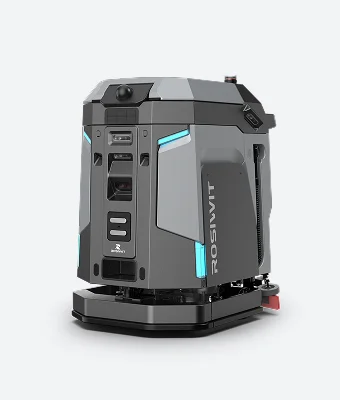
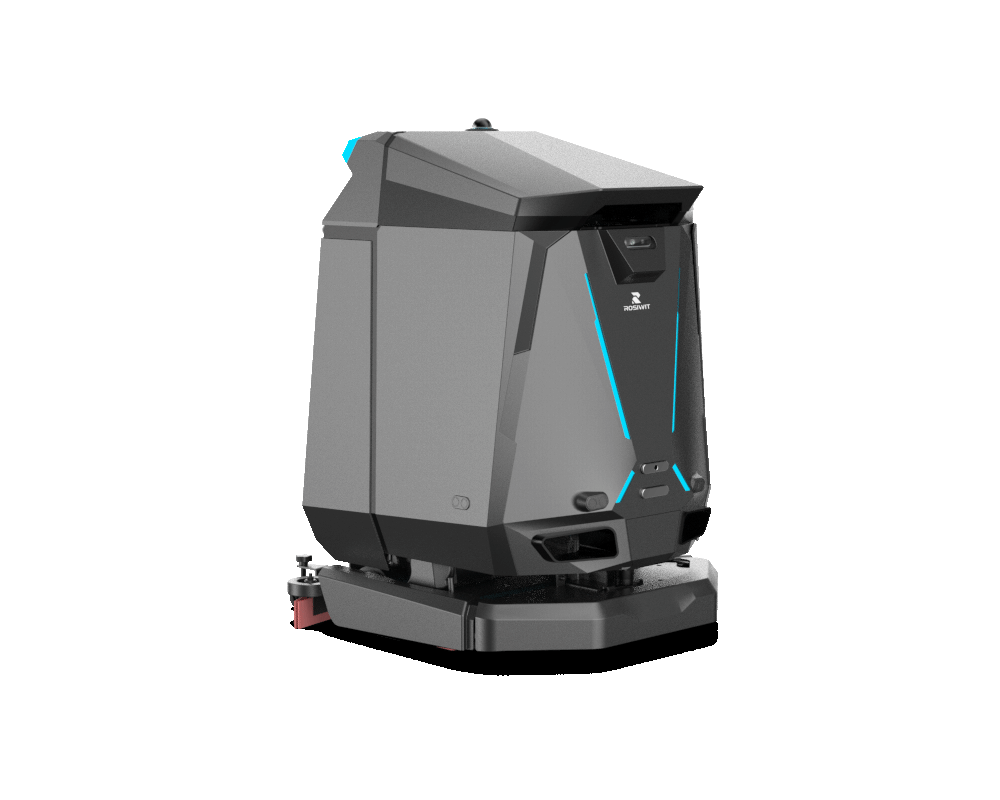
Stereoscopic optical depth mapping enables machinery to distinguish between permanent structural columns and temporary physical obstacles like stacked pallets or mobile cleaning carts. The Skywalker GT integrates 3D LiDAR, RGB-D vision, and ultrasonic sensors to detect suspended, low-lying, and moving obstacles with high accuracy. It supports precise localization, intelligent path planning, obstacle avoidance, anti-drop protection, emergency stop functions, and integrated safety bumpers.
Autonomous Path Planning in Dynamic Facilities
Efficient coverage strategies depend on adaptive route calculation rather than fixed pathing scripts. Evaluating physical space in real time allows a commercial robot floor cleaner to adjust sweeping or scrubbing routes when encountering temporary hallway obstructions. Adaptive path planning minimizes repetitive passes, saving water, power, and brush wear over long operational shifts.
Dynamic obstacle avoidance algorithms recalculate clean routes instantly, preventing unnecessary operational delays during high-traffic hours. Software divides wide commercial floors into optimal coverage grids, prioritizing high-footprint zones during quiet operating windows. Systematic route generation optimizes operational productivity while keeping floor surfaces clean throughout daily business hours.
Mechanical Brush Pressure and Surface Adaptability
Scrubbing performance depends directly on mechanical deck pressure and surface contact consistency. Variable brush pressure adjustments allow equipment to lift heavy industrial dirt from concrete floors while preserving delicate polished stone surfaces. Heavy-duty deck actuators maintain uniform down force, preventing uneven floor wear and ensuring consistent cleaning quality across wide paths.
Adjustable fluid dispensing mechanisms synchronize liquid distribution with active travel speeds to avoid pooling water on floor surfaces. Controlled water deployment speeds up drying times, minimizing slip hazards for building occupants and visitors. Deploying a commercial cleaning robot with dynamic deck pressure controls enables operations teams to maintain diverse floor materials using a single automated solution.
Battery Architecture and Power Management
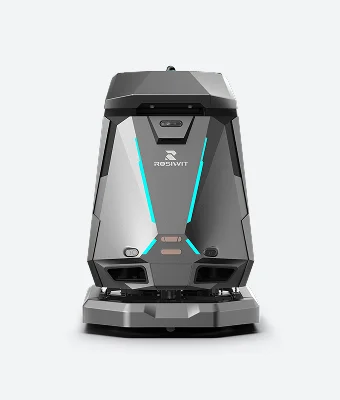
Power delivery systems directly dictate continuous operational capacity across multi-shift commercial premises. The Skywalker 50 utilises long-cycle lithium iron phosphate (LiFePO4) battery packs with stable thermal performance under heavy high-pressure scrubbing workloads, removing the unstable thermal risks of traditional lithium-ion cells.
The ultra-super fast charging workstation defines the Skywalker 50’s core power advantage: a full battery recharge takes only 1 hour, compared to the industry standard 3-hour regular charging cycle.
This rapid opportunity charging enables flexible top-ups during staff shift breaks without halting daily cleaning schedules. In practical operation, the scrubber delivers up to 3.5 hours of continuous heavy scrubbing runtime or up to 10 hours of light mopping per single charge, supporting large-area up to 1,800 m² per hour without frequent mid-shift recharging interruptions. Better power control logic extends daily cleaning square footage while lowering overall facility power consumption.
Fleet Analytics and Operational Telemetry
Digital monitoring tools provide facility administrators with actionable operational transparency across distributed real estate assets. Cloud-connected software platforms collect real-time performance metrics, including clean area square footage, water consumption rates, and battery usage trends. Consolidated telemetry dashboards simplify maintenance tracking, helping managers identify operational bottlenecks and plan preventive maintenance proactively.
Automated digital reports provide verifiable proof of performance for facility management teams and service contractors. Real-time diagnostic alerts inform technicians about routine wear-and-tear or maintenance requirements instantly, preventing unexpected downtime. Utilizing comprehensive digital telemetry allows facility directors to optimize resource allocation across extensive property portfolios.
Workstation Autonomy and Maintenance Workflows
Uninterrupted lights-out cleaning relies entirely on dedicated self-servicing docking hardware to eliminate manual maintenance intervention. The matched intelligent 5-in-1 workstation built exclusively for the Skywalker 50 integrates automatic fresh water refilling, wastewater extraction, ultra-fast 1-hour charging, liquid top-up and waste disposal within one compact footprint. Advanced positioning sensors achieve precise mechanical alignment during autonomous docking to execute fully automatic fluid exchange safely overnight.
This integrated workstation ecosystem removes repetitive manual refilling and draining tasks, redirecting on-site staff toward high-value deep sanitisation work. Paired with the Skywalker 50, the docking station enables fully unsupervised overnight cleaning cycles to expand total daily cleaning output. Streamlined automatic servicing workflows cut long-term labour overhead and guarantee consistent floor care results every operational day.
Conclusion
Evaluating autonomous floor maintenance platforms involves balancing navigation safety, mechanical performance, battery endurance, and digital management tools. Here at Rosiwit, we remain committed to engineering intelligent cleaning machinery that optimizes operational efficiency across diverse commercial architectures.