
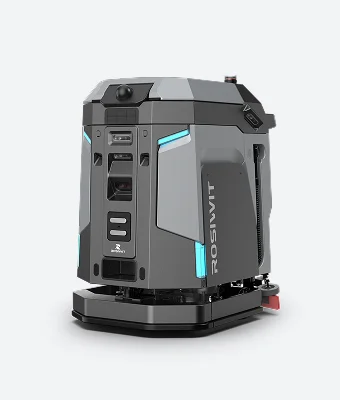

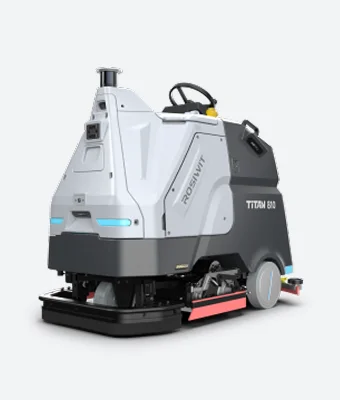
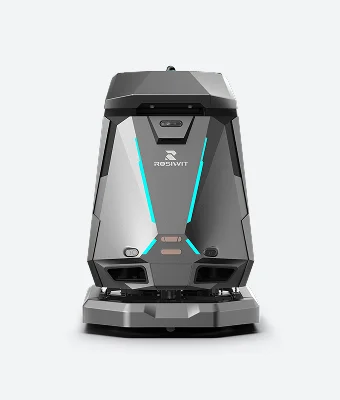
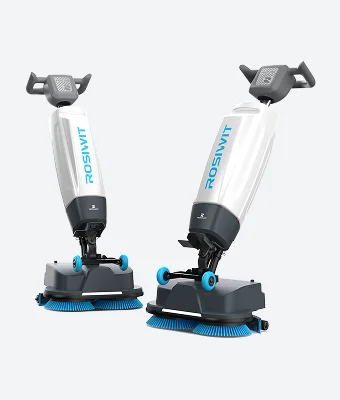
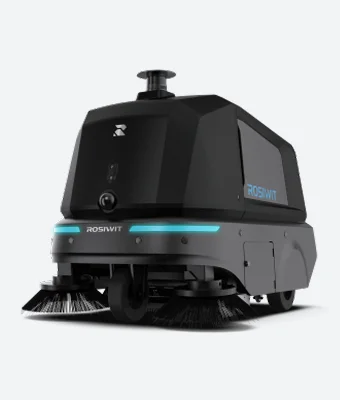

Navigating restricted commercial spaces requires compact maintenance equipment that provides direct physical feedback. Deploying a flexible walk behind floor scrubber gives facility crews precise control around display cases, narrow aisles, and delicate fixtures.
Our engineering work at Rosiwit focuses on balancing user ergonomics with mechanical agitation to support daily sanitation routines, but the true differentiator of manual systems lies in the operator’s ability to adapt cleaning parameters on the fly—responding to spills, adjusting pressure, and steering with tactile precision that no autonomous machine can match.
Integrating an electric walk behind floor scrubber into routine maintenance schedules enhances cleaning performance over traditional mop buckets. Motorized brush heads deliver steady mechanical agitation, removing ground-in dirt without exhausting physical operators.
Yet unlike automated platforms, these units put the operator in full command: every turn, every speed change, and every brush‑lift action is executed through direct manual input, enabling real‑time decisions that match the exact soiling condition and layout in front of them.
Operational Mechanics of Deep Scrubbing
Restoring stained surfaces demands concentrated mechanical agitation paired with continuous moisture extraction. Utilizing a walk behind floor scrubber allows operators to lift grease and grime from porous tiles efficiently. Controlled detergent application loosens stubborn deposits before squeegees extract extracted slurry. Crucially, the operator can instantly increase brush pressure or slow down travel speed when encountering a fresh spill or a stubborn stain—turning this machine into a swift spot‑cleaning tool that deploys within seconds, without programming or navigation setup.
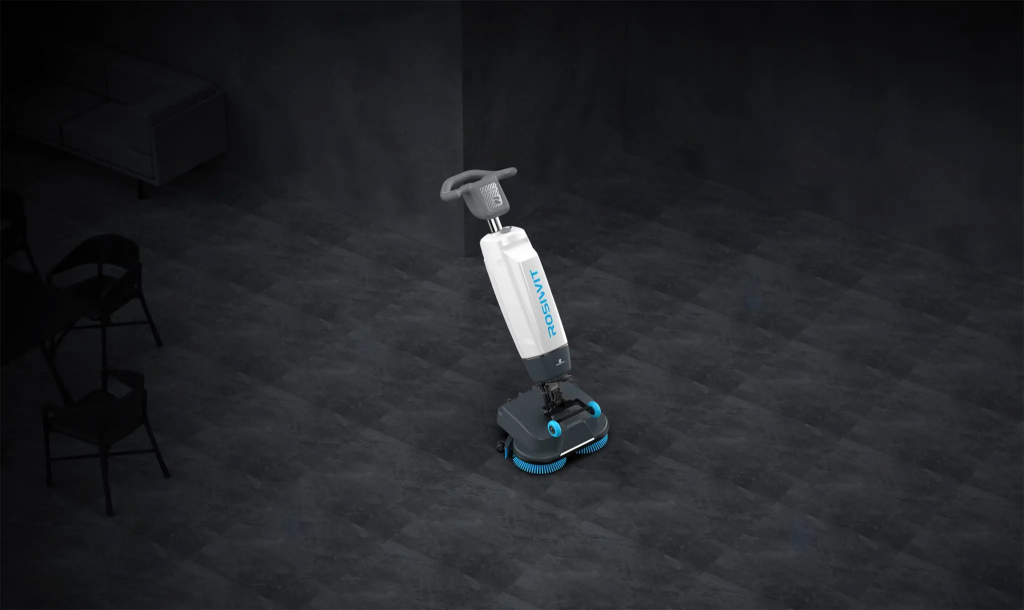
Modern manual equipment combines high agitation with fast liquid recovery. The Pilot One serves as a smart manual scrubber, providing a more powerful deep clean and instant drying scrubber action that keeps walkways dry and safe. Rapid drying prevents slip hazards in busy commercial corridors.
This immediate drying capability, combined with the operator’s ability to reposition the unit in seconds, makes walk‑behind scrubbers ideal for fast response to accidental spills in food courts, hospital lobbies, or retail aisles—restoring safety and appearance before customers even notice the incident.
Runtime Endurance and Battery Swapping
Sustaining continuous cleaning across shift changes relies heavily on efficient energy management. Selecting an electric walk behind floor scrubber powered by advanced battery chemistry prevents mid-shift operational stoppages. Consistent power delivery maintains uniform brush rotation throughout the entire cleaning cycle.
Continuous operation becomes realistic when equipment features swappable power packs. At Rosiwit, we emphasize modular energy designs that allow operators to swap depleted batteries rapidly. Up to 90 minutes of runtime with a replaceable battery supports extended cleaning shifts without long charging delays. For immediate deployment, the lightweight, hot‑swappable battery design means the machine can be back in action within minutes—no scheduling downtime, no waiting for charge cycles—making it perfectly suited for facilities that need continuous readiness for unexpected cleaning calls.
Fluid Capacity and Solution Management
Managing water reserves effectively determines how long equipment operates between servicing breaks. Operating a walk behind floor scrubber requires balanced fluid distribution to prevent frequent trips to drainage sinks. Proper solution control optimizes water usage across varied floor textures.
Separating fresh solution from extracted wastewater maintains hygienic washing standards. Equipping units with 5L + 5L extra-large water tanks maintains steady fluid deployment while keeping chassis dimensions compact. Dedicated dual tanks prevent cross-contamination during intensive scrubbing cycles. Quick‑fill ports and large‑diameter drain hoses allow operators to replenish and empty tanks in under a minute—ensuring that the machine is always ready for a rapid response to any immediate cleaning need, without forcing the crew to leave the target area for prolonged servicing.
Clear tank level indicators and quick-fill ports further streamline refill and dump routines, reducing downtime between cleaning passes. With ample onboard capacity, operators can cover large retail or warehouse floors without interrupting workflow—ensuring consistent moisture control and chemical dilution from the start of a shift to the final pass.
Ergonomic Design and Operator Safety
Choosing an electric walk‑behind floor scrubber with fully adjustable, vibration‑dampened handles and intuitive thumb‑operated controls minimizes physical strain on wrists and shoulders. The height‑adjustable tiller accommodates operators of different statures, while built‑in suspension systems absorb shocks from uneven floor joints—reducing long‑term musculoskeletal risks that are often overlooked in automated solutions.
Smooth propulsion assistance allows operators to guide machinery effortlessly across textured floors. Progressive‑drive control gives the user proportional speed regulation via simple handle pressure, enabling gentle maneuvering around fragile displays and sudden stops for pedestrian safety. Safety features like automatic brush stop and quick‑release squeegees simplify daily operation.
Lower noise output protects operator hearing while permitting daytime cleaning in populated facilities. Thoughtful mechanical design reduces physical exertion, enabling consistent performance across daily sanitation routines. By prioritising ergonomics, these machines ensure that the human element remains the most responsive and reliable component of the cleaning process.
Surface Versatility Across Commercial Settings
Varying floor materials require adaptable cleaning equipment capable of handling diverse surface textures. Operating a walk behind floor scrubber allows maintenance teams to clean polished concrete, vinyl tile, and epoxy resin using a single platform. Variable pad choices allow quick adjustments between aggressive scrubbing and gentle polishing.
Matching pad pressure to surface friction prevents unnecessary wear on protective floor seals. Here at Rosiwit, we design versatile brush decks that adapt to dynamic facility requirements. The operator can switch pad types or adjust detergent dilution in seconds, responding instantly to a change from a greasy kitchen floor to a delicate showroom tile—no reprogramming, no waiting for software updates. Versatile hardware allows commercial properties to maintain diverse flooring materials efficiently.
As a result, facilities reduce equipment duplication and operator training complexity while achieving consistent, high‑quality results across all floor areas.
Targeted Deployment in High-Traffic Facilities
Narrow retail corridors and crowded dining halls present unique physical obstacles for automated platforms. Deploying an electric walk behind floor scrubber in these restricted environments allows operators to maneuver around temporary fixtures safely. Direct manual steering enables instant route adjustments around unexpected dynamic obstacles—a dropped pallet, a wandering shopper, or a suddenly moved display can be avoided on the fly, without needing to recalculate a path.
Compact chassis footprints allow easy storage in standard utility closets without occupying valuable floor space. The Pilot One combines compact mobility with high agitation power, making it ideal for spot cleaning and fast spill response. Its lightweight construction allows a single worker to lift it onto a service cart or carry it up a short flight of stairs, enabling rapid deployment to any floor level without elevators. Agile hardware expands professional floor care into spaces inaccessible to larger machinery. In practice, this means that when a spill occurs near a checkout line, the operator can be on‑site with the scrubber within 30 seconds, clean the area, and have it dry before customers queue up—turning downtime into invisible maintenance.
Conclusion
Selecting appropriate floor care machinery involves evaluating physical control, fluid capacity, battery flexibility, and ergonomic design. However, the true value of modern walk‑behind scrubber systems lies in their operator‑centric advantages: ergonomic handling that protects worker health, direct manual control for instantaneous adaptation, compact footprints for navigating dense spaces, and rapid‑response capability that turns routine equipment into an emergency spill‑response tool.
Our team at Rosiwit remains dedicated to building practical, high‑performance sanitation tools that simplify daily building upkeep across dynamic commercial spaces—always keeping the human operator at the heart of every cleaning action, because the fastest and most intelligent decision‑maker is still the person holding the handle.