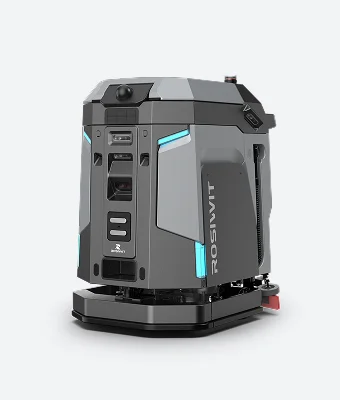

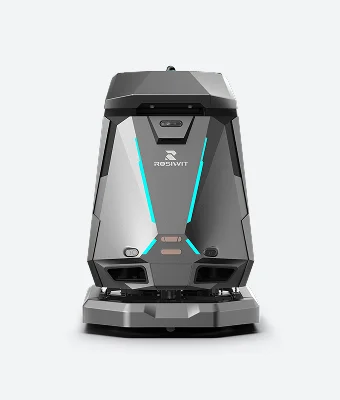
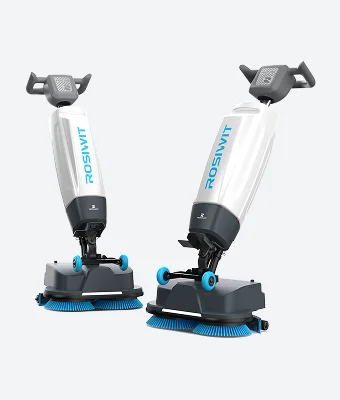
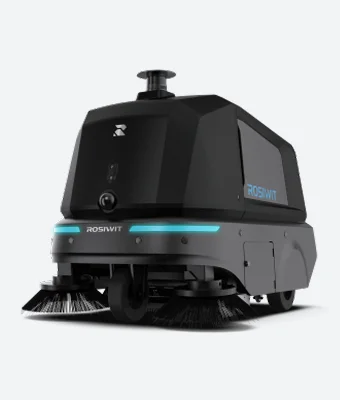

Managing vast logistics hubs and manufacturing plants requires scalable floor care strategies built around high throughput and constant telemetry. Deploying an industrial cleaning robot across thousands of square meters transforms traditional facilities into lean, highly predictable operations. Industrial spaces present unique operational variables, including high-volume dust, complex rack layouts, and dynamic forklift traffic. Through our ongoing engineering work at Rosiwit, we develop robust hardware architectures tailored specifically to these heavy-duty environments.
Operational Scale and High-Volume Throughput
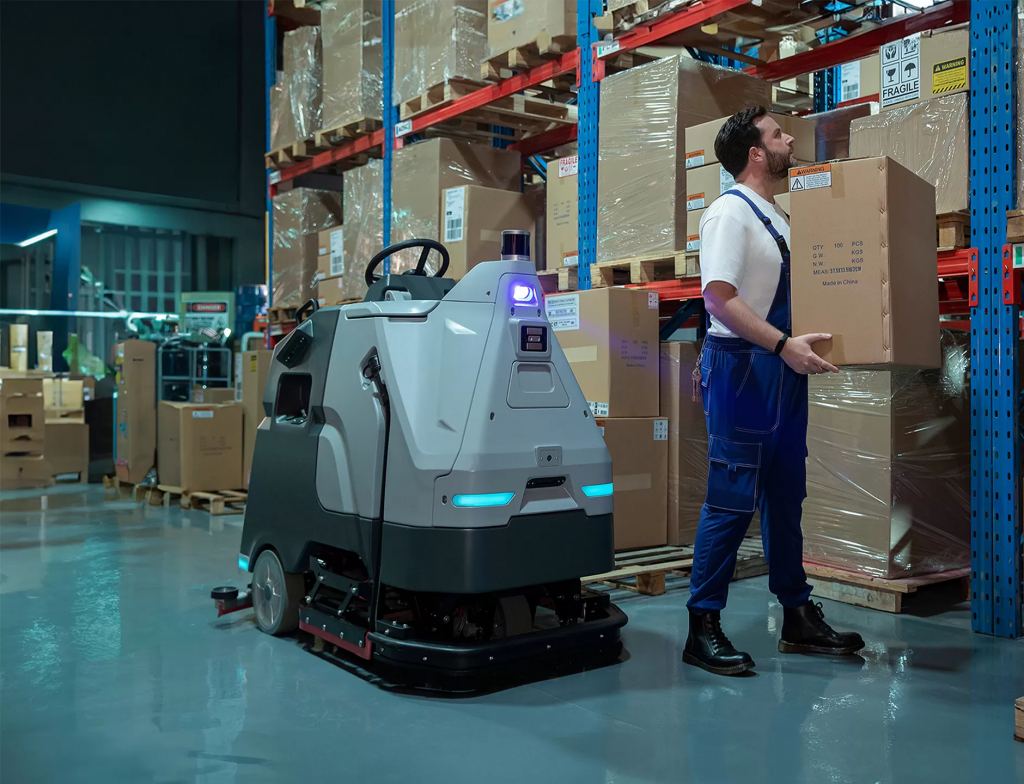
Maintaining pristine floors across sprawling distribution centers demands machinery capable of covering massive surface areas in minimal time. Traditional manual scrubbers struggle to maintain consistent speed over multi-thousand-square-meter layouts, leading to uneven floor care and operational bottlenecks. Automated platforms address this challenge by delivering steady travel speeds, wide scrubbing paths, and uninterrupted cleaning cycles.
Maximizing square-meter throughput depends on balancing chassis size, battery duration, and fluid capacity. Heavy-duty platforms designed for large footprints operate continuously across multi-shift schedules without frequent manual intervention. By maintaining uniform speeds, automated equipment guarantees consistent chemical application and mechanical scrubbing efficiency throughout the entire facility layout.
Cloud Integration and Remote Telemetry Management
Modern facility managers rely heavily on digital visibility to monitor distributed fleet operations and track maintenance metrics. Achieve 100% Cloud-Based and Digital Management with Rosiwit 365—Accessible on Mobile and Desktop, giving operational leaders immediate access to real-time performance telemetry. Centralized cloud platforms eliminate guessing games by consolidating square-footage reports, battery charge levels, and maintenance logs into clear visual dashboards.
Remote monitoring tools allow administrators to analyze operational trends and adjust cleaning schedules from any location. Mobile alerts notify supervisors instantly if machinery encounters unexpected obstacles or requires routine consumable replacements. Cloud connectivity transforms standalone machinery into a fully transparent asset, streamlining resource allocation across extensive commercial property portfolios.
Algorithmic Route Planning in Vast Footprints
Navigating massive logistics bays requires sophisticated path planning algorithms rather than simple randomized patterns. Deploying an industrial robot floor cleaner in broad layouts requires systematic grid coverage that minimizes unnecessary overlaps and saves valuable battery energy. Intelligent mapping software analyzes spatial boundaries to construct optimal cleaning routes tailored to specific building geometries.
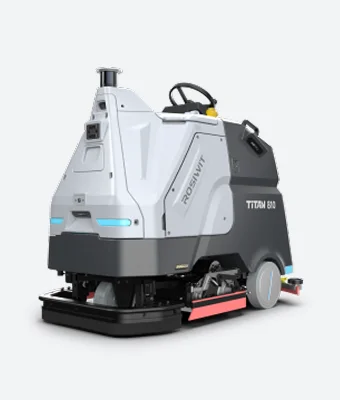
Dynamic path recalculation enables machinery to navigate around temporary pallet stacks or parked machinery smoothly. The Titan 810 incorporates advanced spatial mapping to handle vast warehouse aisles without losing positioning accuracy or skipping designated cleaning paths. Systematic route generation optimizes operational efficiency, helping facilities maintain high visual standards across every square meter.
Heavy-Duty Mechanical Scrub Pressure
Lifting stubborn grime, grease, and tire marks off concrete surfaces requires significant downward force from the brush deck. Standard commercial scrubbers often fail in heavy manufacturing settings because they lack the necessary mechanical torque and down pressure. Dedicated industrial scrubbers use reinforced deck assemblies and high-torque motors to apply firm, even pressure directly to floor coatings.
Variable pressure settings allow equipment to adjust scrubbing intensity depending on surface conditions and dirt concentration. The Titan 810 provides intense down pressure alongside heavy torque, breaking up embedded industrial residues efficiently in single passes. Reliable mechanical force reduces chemical reliance while delivering deep, uniform floor restoration.
Water Resource and Solution Management
Continuous floor scrubbing in large facilities demands substantial solution and recovery tank capacity. Compact water tanks force operators to stop frequently for refills and drainage, drastically lowering overall daily efficiency. Large-capacity fluid systems ensure that solution delivery matches battery endurance, enabling long, uninterrupted cleaning runs.
Intelligent fluid controls regulate water delivery based on travel speed, preventing standing water on polished concrete or resin surfaces. Precise liquid recovery vacuum systems pull extracted slurry into dedicated recovery tanks immediately, keeping busy thoroughfares dry and safe. Proper fluid balance protects floor integrity while accelerating drying times across busy operational corridors.
Autonomous Servicing and Workstation Integration
Achieving true operational efficiency in large facilities involves automating daily maintenance routines alongside floor cleaning. Integrating an industrial cleaning robot with automated docking stations removes manual servicing bottlenecks entirely from daily workflows. Automated stations manage wastewater discharge, clean water refilling, and battery charging without requiring physical operator supervision.
Self-docking mechanisms align precisely with servicing ports to execute fluid transfers safely and efficiently. Docking automation allows facility teams to schedule heavy scrubbing shifts during off-peak overnight hours. Automating routine maintenance frees facility personnel to focus on higher-level maintenance priorities across the property.
Predictive Maintenance and Long-Term Durability
Heavy industrial operations put tremendous stress on mechanical components, chassis frames, and electronic drives. Heavy-duty structural engineering protects internal components against accidental impacts with metal racking, wooden pallets, and concrete pillars. Durable materials reduce wear-and-tear, extending equipment operational lifespans under continuous multi-shift demands.
Integrated telemetry platforms monitor component health continuously, providing early warnings before minor wear causes operational downtime. Tracking brush wear, motor temp, and battery health helps maintenance teams perform proactive repairs during planned maintenance windows. Building rugged hardware ensures consistent, reliable performance across demanding industrial environments year after year.
Conclusion
Optimizing large-scale industrial floor care requires combining high-capacity hardware, dynamic navigation, and reliable cloud telemetry into a unified workflow. Our team at Rosiwit remains dedicated to developing scalable autonomous solutions that elevate operational standards across broad commercial and industrial landscapes.