
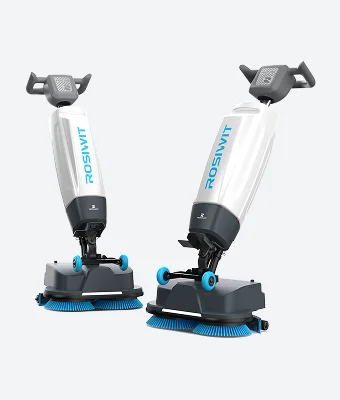
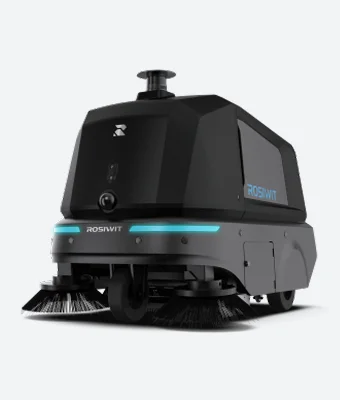

In today’s commercial and industrial environments, maintaining high standards of cleanliness is no longer just a routine task—it’s a crucial factor for operational efficiency, safety, and productivity. An industrial cleaning robot is now a strategic solution for enterprises seeking consistent, reliable, and automated cleaning performance. At Rosiwit, we design intelligent solutions that help businesses optimize labor, maintain hygiene, and improve overall facility management.
Modern cleaning robots integrate autonomous navigation, intelligent obstacle detection, and adaptive cleaning strategies. Unlike traditional manual methods, these systems can operate in dynamic and complex spaces, ensuring that operations continue without disruption while improving cleaning quality.
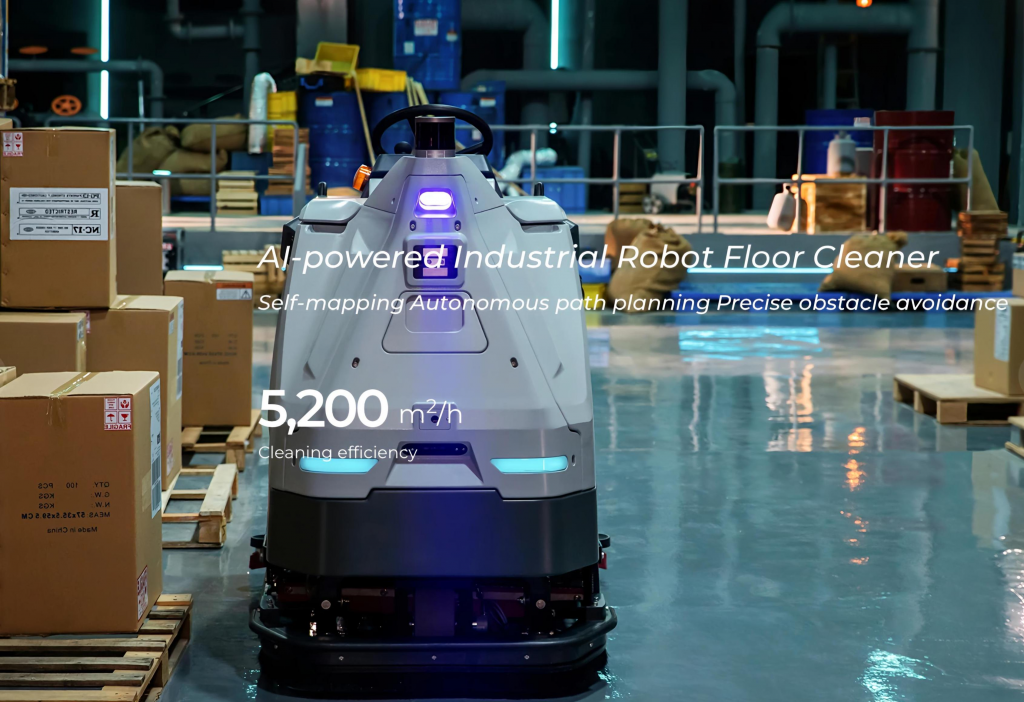
Intelligent Navigation in Industrial Floor Cleaning Robots
A critical feature for any industrial floor cleaning robot is its navigation and positioning capability. In B2B environments, cleaning tasks must be executed efficiently without interfering with daily operations. Robots must navigate around obstacles, adapt to layout changes, and maintain stable performance even in highly dynamic settings.The precision of modern navigation systems allows robots to operate safely alongside human staff, avoiding collisions while ensuring every area is thoroughly cleaned.
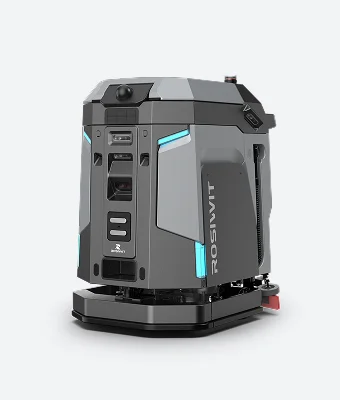
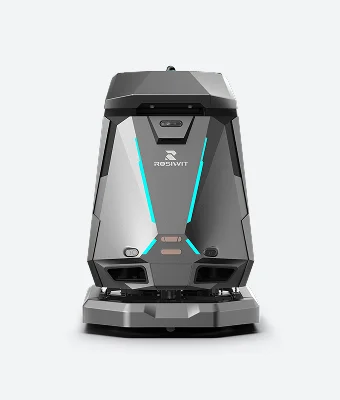
At Rosiwit, our Skywalker GT is engineered for such demands. Built on a 48V hardware platform, it operates effectively in retail spaces, hospitals, educational campuses, and transportation hubs. Equipped with a six-layer safety system, it ensures reliable operation even in crowded environments, while its intelligent navigation allows smooth path planning and obstacle avoidance.
The Skywalker GT’s long-endurance operation and low-noise performance make it ideal for facilities that require ongoing cleaning during operational hours. Its intelligent mapping system also allows rapid deployment, reducing the time needed to implement cleaning routines across multiple areas.
Titan 810: High-Performance Cleaning for Large-Scale Facilities
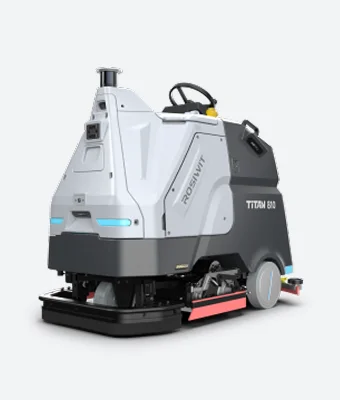
For larger commercial or industrial facilities, robust computing and autonomous decision-making are essential. The Titan 810, developed by Rosiwit, is a high-performance industrial cleaning robot designed for logistics centers, warehouses, transportation hubs, and expansive public spaces.
Powered by an NVIDIA 100 TOPS computing platform, Titan 810 delivers advanced real-time processing for precise navigation in complex and fast-changing environments. This allows the robot to continuously analyze its surroundings, optimize cleaning routes, and respond quickly to unexpected obstacles.
The Titan 810 also supports long-duration autonomous operation, which is crucial in large facilities where downtime is costly and manual cleaning disrupts workflow. Its ability to maintain consistent cleaning quality while reducing labor requirements makes it a strategic solution for B2B operations. More details about the product can be found here: Titan 810.
Applications of Industrial Floor Cleaning Robots
The practical applications of an industrial floor cleaning robot extend across multiple industries. In logistics centers, robots like Titan 810 maintain warehouse aisles, loading zones, and sorting areas efficiently, navigating narrow passages and avoiding moving equipment.
Retail and commercial facilities benefit from Skywalker GT, which can perform routine cleaning during business hours without disturbing customers. Intelligent scheduling allows operations to be adjusted to low-traffic periods or specific zones, improving both efficiency and customer experience.
Hospitals and educational institutions also rely on robotic cleaning solutions to maintain hygiene standards. Automation ensures consistent cleaning performance and reduces human error, which is especially important in sensitive environments.
Across all these scenarios, these robots enhance operational consistency, reduce reliance on manual labor, and contribute to safer, cleaner facilities.
Operational Benefits and Smart Facility Integration
From a facility management perspective, automation is a strategic necessity. Rosiwit delivers solutions that integrate seamlessly into existing operations, minimizing disruption while maximizing efficiency.
By adopting intelligent cleaning robots, companies can significantly improve resource allocation, redirecting human staff to value-added activities instead of routine floor maintenance.
Industrial floor cleaning robots optimize costs by reducing labor requirements and increasing cleaning output per hour. Their intelligent navigation ensures that routes are efficient, avoiding redundant movement and unnecessary energy use.
Deployment flexibility is another key advantage. Whether in new warehouses or existing commercial spaces, robotic cleaning systems can be quickly adapted to different layouts, allowing enterprises to scale operations across multiple locations efficiently.
By combining hardware stability, advanced navigation, and intelligent computing, Rosiwit provides cleaning solutions that meet the evolving demands of modern industrial and commercial facilities.
Conclusion: Transforming Facility Maintenance with Automation
As industries continue to grow in scale and complexity, automation in facility maintenance is becoming essential. An industrial cleaning robot provides enterprises with improved efficiency, reduced operational costs, and consistent cleaning performance.
Similarly, the industrial floor cleaning robot is now a vital component of smart facility management, particularly in logistics, retail, and transportation sectors where continuous operation is crucial.Their adoption represents a shift toward data-driven facility management, where actionable insights guide both cleaning and operational planning.
At Rosiwit, our solutions, including Skywalker GT and Titan 810, are designed to help enterprises achieve safer, more efficient, and scalable operations. By adopting intelligent cleaning systems, facilities can ensure high standards of hygiene, improve productivity, and reduce dependency on manual labor—all while integrating seamlessly into existing workflows.