


A scrubber built for an open warehouse can be the wrong choice for a restaurant kitchen. Or a gym floor between equipment rows. Or a narrow service corridor. In these spaces, width and turning radius matter more than tank size or motor power. So does how quickly staff can learn the machine. Most buying guides focus on the wrong specs first.
Rosiwit designed the Pilot One NEO around this problem. It is a walk behind floor scrubber built for facilities where every aisle counts. This guide covers what actually separates a scrubber that fits a narrow space from one that does not.
Why Is Choosing a Walk Behind Floor Scrubber Different for Narrow Commercial Spaces?
Choosing a walk behind floor scrubber for a tight layout means prioritizing width and turning radius over tank size, because a machine that cannot turn in a narrow aisle cannot clean at all.
How Narrow Is “Narrow” in Gyms, Restaurants, and Kitchens?
“Narrow” usually means a doorway or aisle narrower than most cleaning equipment is designed for, which rules out full-size scrubbers before performance even enters the conversation.
Why Do Standard-Size Scrubbers Struggle in These Layouts?
A standard scrubber’s body typically runs several inches wider than its cleaning path, so a doorway that looks wide enough on paper can still block daily use. This mismatch pushes staff back to mop-and-bucket cleaning in the exact spaces that need consistent results most.
| Space Type | Narrow-Layout Challenge |
| Gym | Equipment rows, tight turns between machines |
| Restaurant / Dining Area | Table spacing, service aisles during off-hours |
| Kitchen | Prep stations, storage racks, wet-floor risk |
What Should You Look for in a Small Walk Behind Floor Scrubber?
A small walk behind floor scrubber should be judged on maneuverability first, then on how much cleaning performance it delivers without adding width. Buyers who start with tank size alone often end up with a machine that cannot reach half the facility.
How Does Maneuverability Affect Cleaning in Tight Aisles?
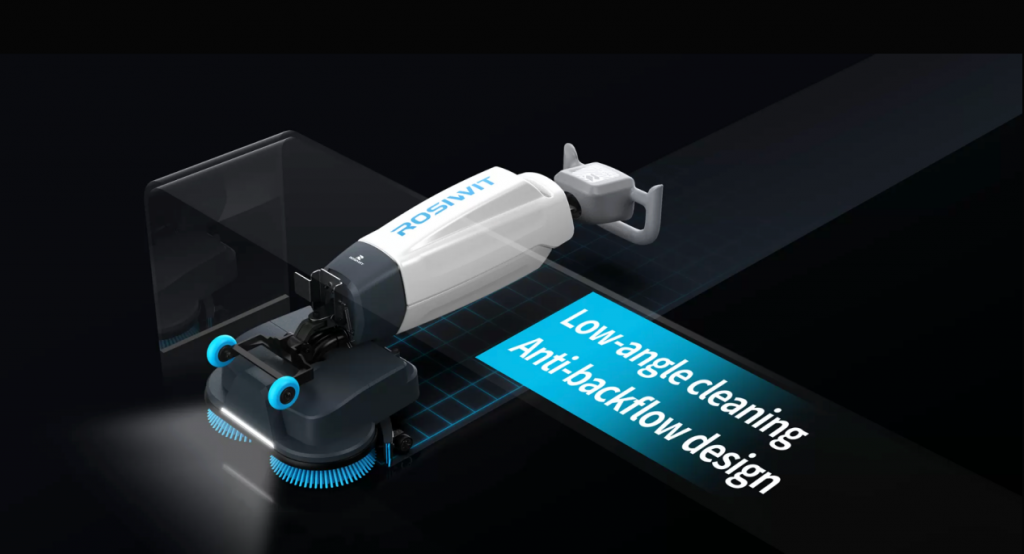
Tight turning matters more than raw power in a narrow layout. Its 360°maneuverability allows operators to change direction more easily in tight spaces instead of backing out of an aisle, keeping cleaning continuous around gym racks or kitchen islands.
Which Cleaning Performance Numbers Actually Matter?
Brush speed and cleaning-path efficiency matter more than tank size once a machine is narrow enough to fit. Brush speed (RPM) determines how fast the brush agitates the floor per pass, while cleaning efficiency (m²/h) shows how much floor gets covered per hour.
- Brush speed (RPM): higher RPM lifts grime in fewer passes
- Cleaning efficiency (m²/h): area covered per hour at normal operating speed
- Runtime: up to 90 minutes per battery cycle, depending on operating conditions.
How Does Rosiwit’s Pilot One NEO Fit Narrow, High-Traffic Spaces?
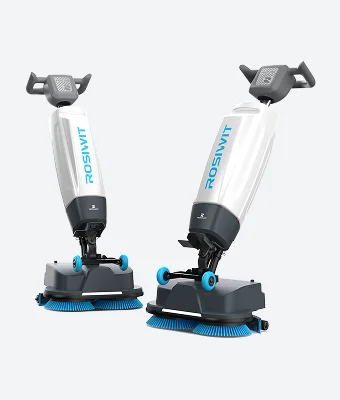
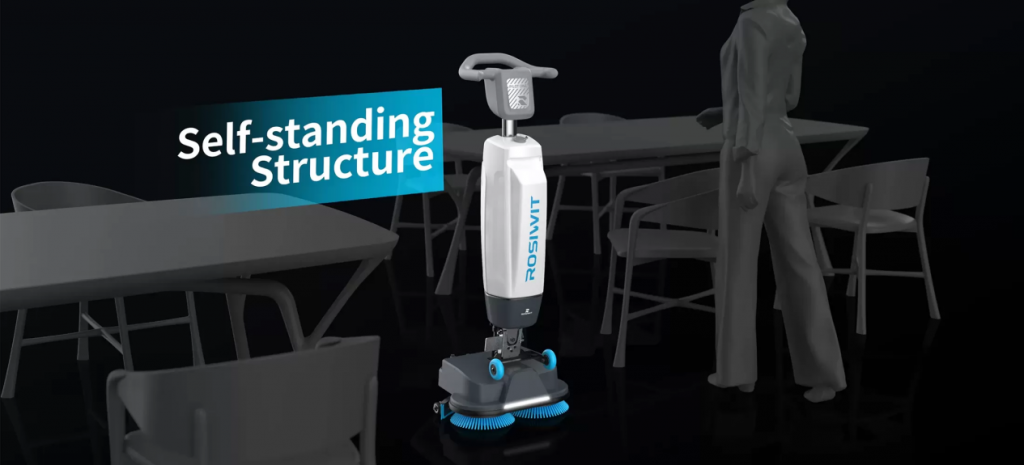
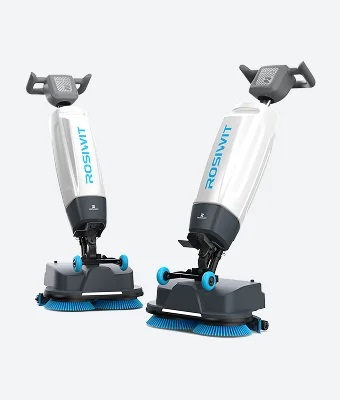
Rosiwit’s Pilot One NEO is an operator-guided electric scrubber built for compact, high-traffic spaces. Its lightweight design, dual brushes, and 360° maneuverability simplify cleaning around fixed obstacles instead of requiring wide-open floor plans.
What Are the Pilot One NEO’s Core Specifications?
The machine pairs a light frame with dual high-speed brushes and dual tanks to balance maneuverability against cleaning capacity.
| Pilot One NEO Feature | Specification |
| Weight | 18 kg |
| Cleaning efficiency | 1,200 m²/h |
| Water tanks | 5L + 5L (clean + recovery) |
| Runtime | Up to 90 minutes |
| Brush speed | 300 RPM, dual brushes |
| Steering | 360° maneuverability |
| Compatible floors | Tile, terrazzo, marble, epoxy, sealed concrete |
How Does Cloud-Based Tracking Help Manage Cleaning in Tight Layouts?
Cloud-based management gives facility teams visibility into where cleaning happened without walking the floor to check. The system supports multi-device management, geofencing, remote lock, and cleaning-area counts, which matters for teams overseeing several small sites at once.
What Should You Check Before Buying a Walk Behind Floor Scrubber Machine?
A walk behind floor scrubber machine is only as useful as the support behind it, so deployment time and after-sales response deserve the same scrutiny as the spec sheet.
How Long Does Deployment Actually Take?
Deployment time depends on operator training, setup, and the facility’s cleaning requirements. Ask any supplier for the actual time from delivery to a staff member operating the machine unsupervised, since the Pilot One NEO’s one-click touchscreen start is designed to shorten that window.
Why Does Overseas After-Sales Responsiveness Matter So Much?
For imported equipment, after-sales speed decides whether a breakdown costs hours or weeks. Confirm parts-stock location and guaranteed response windows before signing a purchase order, not after the first service call.
Walk-Behind vs. Other Scrubber Types — Which Fits a Narrow Space?
The right scrubber type depends on floor size and layout, not on which machine covers the most square footage per hour.
How Does a Walk-Behind Scrubber Compare to a Ride-On Machine or Manual Mop?
A walk-behind scrubber fits spaces too tight for a ride-on unit while cleaning more consistently than a mop.
| Factor | Manual Mop | Walk-Behind Scrubber | Ride-On Scrubber |
| Fits narrow aisles | Yes | Yes | Often no |
| Drying time | Slow, leaves residue | Fast, single pass | Fast, single pass |
| Best fit | Spot cleaning | Gyms, restaurants, kitchens | Large open floors |
When Should a Distributor Recommend a Robot Instead of a Walk-Behind?
A distributor should recommend a robot once a client’s floor plan opens up and staffing coverage becomes the bigger constraint than aisle width. A narrow kitchen or dining area still calls for an operator-guided machine, while an open supermarket or mall floor is where an autonomous robot earns its cost.
Conclusion — Choosing the Right Walk Behind Floor Scrubber for Your Space
For gyms, restaurants, kitchens, and any facility built around narrow aisles, the right walk behind floor scrubber is the one that turns in the space you actually have, not the one with the largest spec sheet.
- Measure doorways and aisles before comparing machines
- Weigh brush speed and runtime once width is confirmed
- Confirm after-sales response and deployment time before signing
Facility managers and distributors can review the Pilot One NEO’s full specifications on Rosiwit’s product page.