
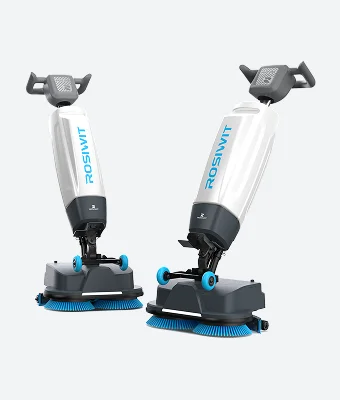
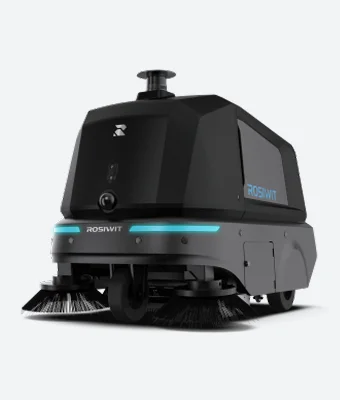

Large facilities usually have complex cleaning requirements. Factories, warehouses, and transportation sites often cover wide areas with different floor conditions, traffic patterns, and operating schedules. Traditional cleaning methods may require repeated planning and significant manpower. As facility sizes increase, companies need to consider how cleaning equipment can work with daily operations.
An industrial cleaning robot can help businesses manage floor maintenance through automated routes and planned cleaning tasks. However, selecting suitable equipment requires a clear understanding of site conditions, cleaning goals, and operation processes. A practical solution should match the working environment instead of simply adding automation features.
Key Factors in Large Facility Cleaning Planning
Large facilities usually include different areas with different cleaning requirements. A warehouse may need regular removal of dust and debris, while a production area may require stable floor maintenance because of daily activities. Before selecting equipment, managers should review floor materials, traffic flow, and cleaning schedules.
The working environment also affects equipment selection. Narrow passages, moving vehicles, and changing layouts require cleaning machines with suitable navigation functions. For engineering and procurement teams, defining these conditions helps create clear requirements before introducing automated cleaning solutions.
Many companies evaluate an automatic floor cleaner industrial solution by checking whether it fits existing workflows. The equipment should operate around normal activities and avoid unnecessary changes to daily operations. Route planning, operation time, and maintenance needs are important points during evaluation.
For businesses managing multiple facilities, a consistent cleaning approach can simplify daily management. Different locations may have different conditions, but a suitable equipment plan allows teams to adjust cleaning tasks according to specific environments.
How Automated Navigation Supports Daily Cleaning Tasks
Navigation technology plays an important role in large-area cleaning. Automated equipment needs to understand surrounding conditions, identify obstacles, and follow planned routes. These functions help reduce repeated manual adjustments during routine cleaning work.
Our company develops cleaning solutions for industrial and commercial environments where operation efficiency and process management are important. Rosiwit focuses on AI cleaning robot technology and applies intelligent navigation methods to support different facility requirements. The purpose is to help users organize cleaning tasks with clearer procedures.
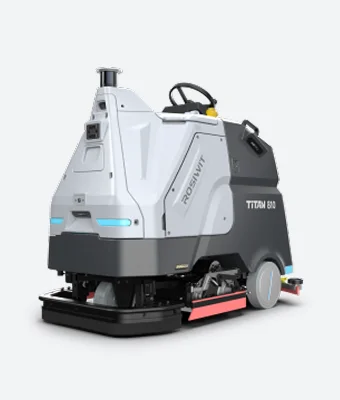
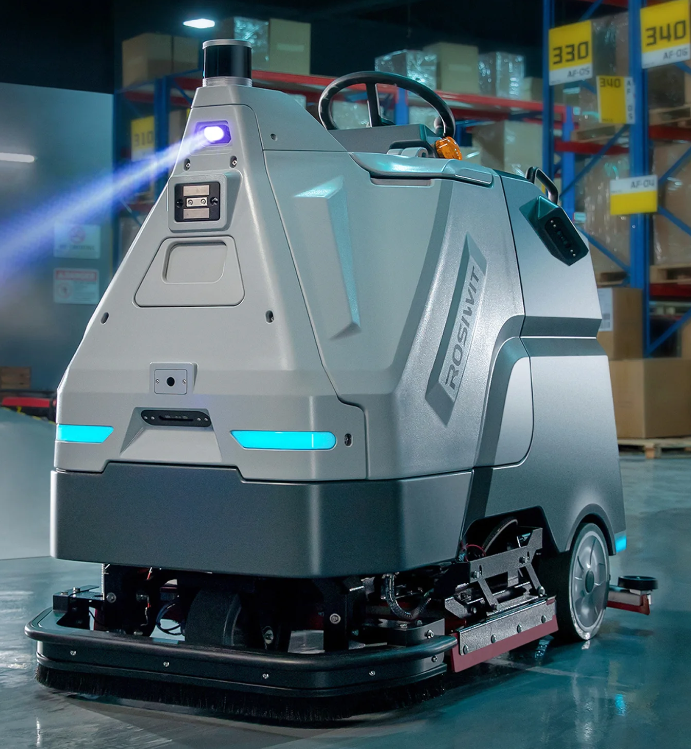
The Titan 810 Industrial Robotic Floor Scrubber combines AI navigation technology with heavy-duty mechanical performance. It supports fully autonomous mapping and accurate obstacle avoidance, allowing the machine to create cleaning routes and respond to environmental changes during operation.
For large warehouses or production areas, automated mapping can reduce the need for frequent route setup. Operators can arrange cleaning schedules according to different zones, while the equipment performs repeated floor maintenance based on the planned tasks.
Equipment Performance and Site Requirements
Large facilities often require cleaning equipment that can handle extended operation and different floor conditions. Buyers should review factors such as cleaning coverage, machine structure, maintenance access, and compatibility with the working environment.
Industrial cleaning equipment needs to match the physical conditions of each site. For example, a warehouse with wide aisles may have different requirements from a production area with more fixed equipment. Understanding these differences helps companies select more suitable solutions.
When choosing an industrial cleaning robot, businesses should also consider how the equipment connects with existing management processes. Simple operation, clear task settings, and convenient maintenance can influence the long-term use experience.
The Titan 810 Industrial Robotic Floor Scrubber is designed for industrial cleaning scenarios that require autonomous operation and stable mechanical performance. Its design combines intelligent navigation features with cleaning functions for large spaces, making it suitable for environments such as warehouses and production facilities.
How Cleaning Automation Fits Daily Management
Introducing automated cleaning equipment is not only about replacing manual tasks. Companies also need to consider how the equipment works with existing cleaning teams, engineering departments, and facility management systems. Clear communication helps define practical operation methods.
A suitable implementation process usually starts with site evaluation. Teams can identify cleaning areas, determine operation schedules, and review equipment performance in the actual environment. This approach helps companies understand how automation affects current workflows.
For facility managers and cleaning service providers, automated equipment can become part of a wider service model. Traditional cleaning experience combined with robotic technology can create new options for improving service processes and operational planning.
Rosiwit provides AI-based cleaning solutions for industries that need automated floor maintenance in large spaces. By combining robotic hardware and intelligent systems, the company works with B2B customers to explore cleaning methods based on different application conditions.
Creating a More Efficient Facility Cleaning Process
The value of automated cleaning depends on how well the technology matches daily operations. Companies need to review site conditions, cleaning schedules, equipment functions, and maintenance requirements before making decisions.
As industrial spaces continue to develop, automation can become a useful tool for improving cleaning management. A suitable automatic floor cleaner industrial solution can help businesses organize routine maintenance tasks while supporting more structured facility operations.
A clear cleaning strategy connects technology with real workplace needs. By evaluating application environments and operational goals, businesses can introduce automated equipment in a more practical way for warehouses, factories, and other large facilities.