


Walk into a supermarket at lunchtime. Or a hospital corridor between shift changes. Or a mall on a Saturday afternoon. The same problem shows up every time: floors get dirty faster than staff can keep up. Facility teams have long solved this with more mops, more shifts, and more overtime. That fix grows costlier as foot traffic increases.
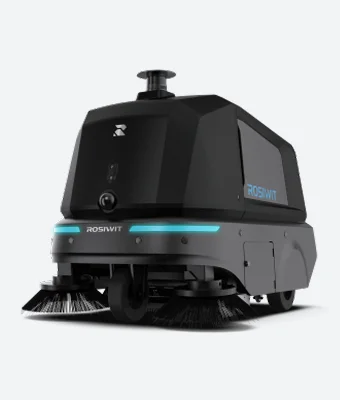
Autonomous cleaning robots are changing that equation. They handle continuous floor care without adding headcount. Companies like Rosiwit build commercial robots specifically for these high-traffic environments. This guide breaks down why these venues struggle with manual cleaning, and how a purpose-built robot performs on a crowded floor.
Why Do Supermarkets, Malls, and Hospitals Struggle to Keep Floors Clean?
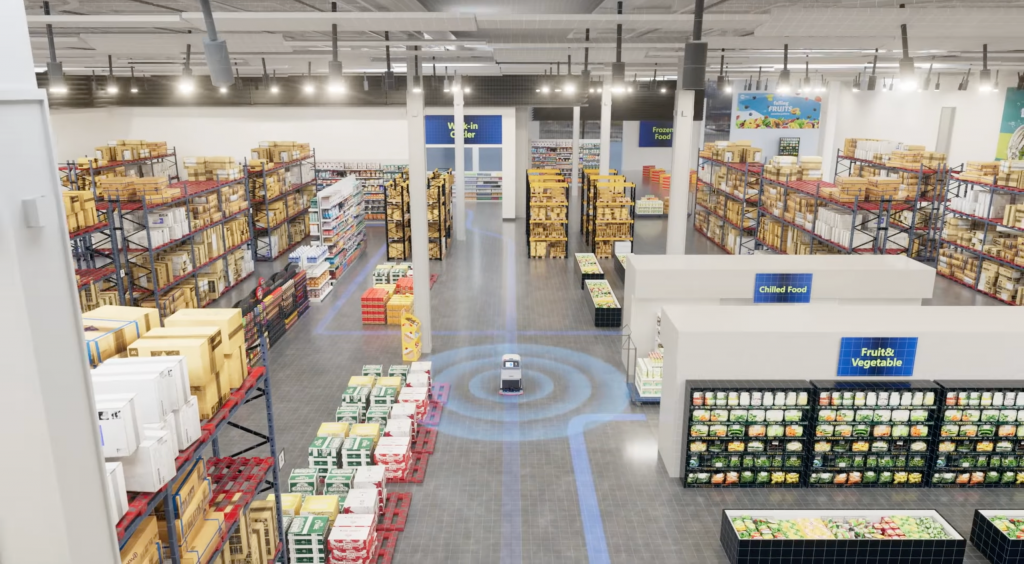
Constant foot traffic dirties floors faster than manual crews can respond. Supermarkets, grocery stores, hospitals, and shopping malls run long hours with steady pedestrian flow, so spills and dust build up between cleaning rounds.
What Makes High-Traffic Cleaning So Labor-Intensive?
Cleaning demand spikes exactly when staff are stretched thinnest. A grocery store faces checkout-aisle spills during lunch rushes, while a hospital corridor needs attention between shift changes. As a result, crews fall behind during peak hours.
How Much Does Manual Floor Cleaning Really Cost?
Labor is typically the largest expense in a facility’s cleaning budget. The median hourly wage for U.S. janitors and building cleaners reached $17.27 in May 2024, according to the Bureau of Labor Statistics. Across multiple shifts and venues, that cost compounds quickly for any chain running more than a few locations.
| Venue | Peak Cleaning Challenge |
| Supermarket / Grocery | Checkout and produce-aisle spills |
| Hospital | Hygiene standards during 24/7 operation |
| Shopping Mall | Wide walkways, weekend crowd surges |
What Is an Autonomous Cleaning Robot and How Does It Work?
An autonomous cleaning robot can navigate and perform routine floor-cleaning tasks with limited direct operator control. It maps its surroundings, plans a route, and adjusts course when people or objects cross its path, unlike a push-behind unit that depends entirely on the operator.
Three technologies make this possible:
- LiDAR (Light Detection and Ranging):measures distance to nearby objects to build a live map
- RGB-D vision:pairs color cameras with depth sensing to identify obstacles
- Ultrasonic sensing:detects low or reflective objects cameras can miss
How Is an Auto Floor Scrubber Different From a Manual Machine?
An auto floor scrubber removes the need for a person to steer and time the cleaning pass. Because it follows a mapped path on its own, it can run during off-peak hours or alongside shoppers, not only when staff are free to push it.
What Technology Lets an Automatic Floor Cleaning Machine Avoid Obstacles?
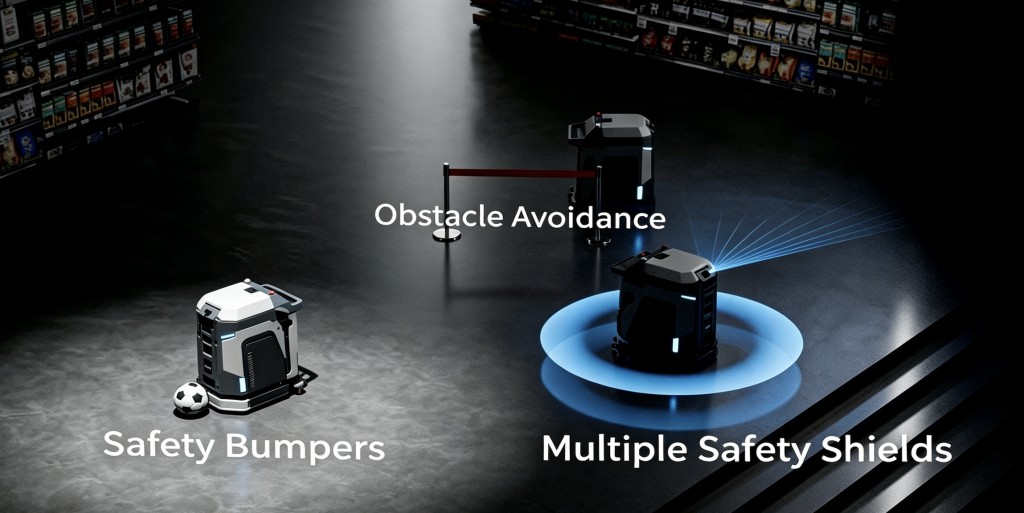
Sensor fusion is what lets an automatic floor cleaning machine react safely in a crowded aisle. Combining LiDAR, vision, and ultrasonic sensing helps the robot identify different types of obstacles and adjust its path in dynamic environments.
How Does Rosiwit’s Skywalker GT Handle Crowded, Complex Spaces?
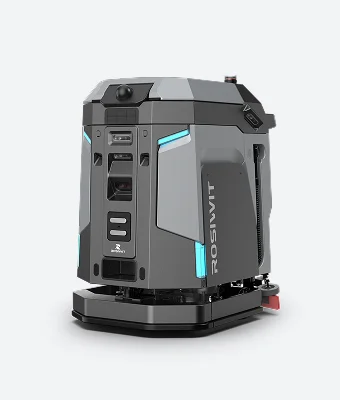
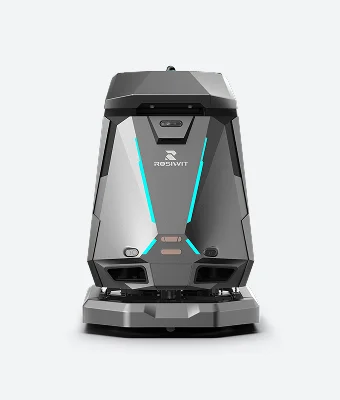
Rosiwit’s Skywalker GT is an indoor commercial cleaning robot built for spaces where people and obstacles move constantly. It combines 3D LiDAR, RGB-D vision, and ultrasonic sensing to identify suspended, low-lying, and moving obstacles, then applies path planning and anti-drop protection.
What Makes the Skywalker GT Suited to Malls and Hospitals?
The Skywalker GT can support multi-floor cleaning in suitable facilities by operating with elevators and passing through security gates. It can ride elevators, pass through security gates, and work near AGVs (automated guided vehicles) in a factory setting, extending cleaning coverage beyond a single floor.
| Skywalker GT Feature | Specification |
| Brush pressure | 33 kg |
| Operating noise | 60 dB |
| Maintenance station | 5-in-1 intelligent docking |
| Component swap | 10 minutes |
| Consumable swap | 10 seconds |
| Warranty | 2 years |
| Compatible floors | Tile, terrazzo, marble, epoxy, concrete |
How Does Rosiwit Keep the Robot Running With Minimal Downtime?
The docking station handles charging, water refill, and pad rinsing without staff involvement, so the robot returns to its route on its own. Core components swap in 10 minutes and consumables in 10 seconds, keeping service windows short.
What Happens When a High-Traffic Venue Deploys an Autonomous Cleaning Robot?
Rosiwit’s Skywalker GT was installed at Hongyang International Furniture Mall in Nanjing, where the No. 1 Furniture Hall spans 8,000 m² of crowded walkways across two floors.
How Did Hongyang Furniture Mall Apply This to Its Crowded Walkways?
- Context:An 8,000 m² furniture hall with heavy foot traffic across floors 3 and 4 needed consistent cleaning without disrupting shoppers.
- Action:A Skywalker GT unit was deployed to navigate the crowded walkways and maintain scrubbing performance throughout business hours.
- Result:The mall gained continuous floor coverage in a high-traffic zone that had previously relied on manual scrubbing alone.
How Should Facility Managers and Distributors Choose the Right Solution?
The right choice depends on traffic volume, floor size, and shift staffing. Manual scrubbing still works for small, low-traffic spaces, but it loses ground once a venue runs long hours with constant foot traffic.
| Factor | Manual Scrubbing | Autonomous Cleaning Robot |
| Coverage during peak hours | Limited by staff availability | Can follow scheduled routes with reduced operator intervention |
| Consistency across shifts | Varies by operator | Follows programmed routes and applies consistent cleaning parameters |
| Best fit | Small, low-traffic sites | Supermarkets, hospitals, malls |
What Should Distributors Look for Before Recommending a Robot to Clients?
Distributors should weigh floor-type compatibility, docking-station footprint, and component swap time before recommending a unit. Because maintenance downtime affects a client’s daily operations, a shorter swap time reduces the support burden after installation.
Conclusion — Is an Autonomous Cleaning Robot Worth It for Your Facility?
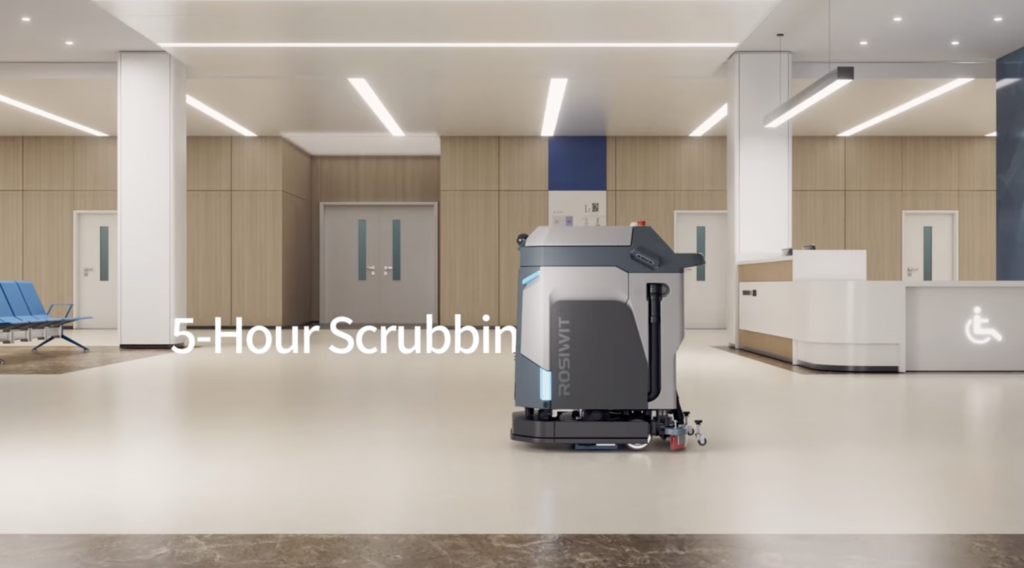
For supermarkets, hospitals, and malls running long hours with heavy foot traffic, closing the gap between cleaning demand and staff availability is the core problem an autonomous cleaning robot solves.
- Continuous coverage during peak pedestrian hours
- Consistent cleaning pressure across every shift
- Reduced dependence on adding headcount during busy seasons
Facility managers and distributors evaluating this shift can review the Skywalker GT’s specifications and application scenarios on Rosiwit‘s product page.