

Maintaining clean floors in warehouses, factories, logistics centers, and other large commercial facilities requires equipment that can handle demanding cleaning tasks. Businesses traditionally rely on a heavy duty floor scrubber to remove stubborn dirt and recover wastewater. However, as labor costs rise and facility operations become more complex, autonomous cleaning technology is becoming an increasingly attractive option.
So, should businesses continue using conventional scrubbers or invest in industrial cleaning robots? The answer depends on facility size, cleaning frequency, labor availability, and long-term operational goals.
Understanding the Difference Between the Two Machines
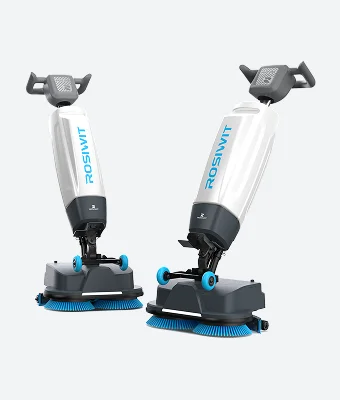
A heavy duty floor scrubber is designed to clean large floor areas and remove stubborn dirt, stains, and industrial residue. Depending on the model, it may be operated manually through a walk-behind or ride-on system. Its main advantages include strong scrubbing performance, straightforward operation, and suitability for demanding floor conditions.
In comparison, industrial cleaning robots combine mechanical cleaning capabilities with autonomous navigation technology. They can map working environments, plan cleaning routes, and navigate around obstacles with limited human intervention.
The main difference is therefore not simply cleaning power. A conventional scrubber depends on an operator to control its movement, while an autonomous robot can perform scheduled cleaning tasks with greater independence.
Cleaning Performance: Which Handles Heavy-Duty Tasks Better?
Cleaning performance is one of the most important considerations when selecting equipment.
A heavy duty floor scrubber is suitable for environments with stubborn stains, accumulated dirt, and demanding floor conditions. Its brush pressure and water recovery capabilities directly influence cleaning results.
However, traditional equipment requires operators to control cleaning routes and monitor the process. Performance can therefore vary depending on operator experience and working schedules.
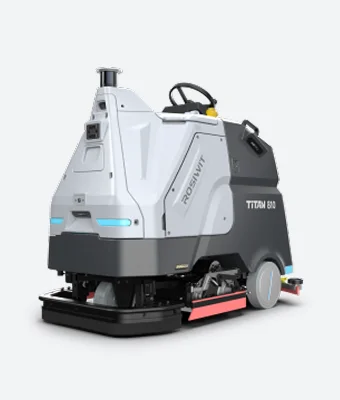
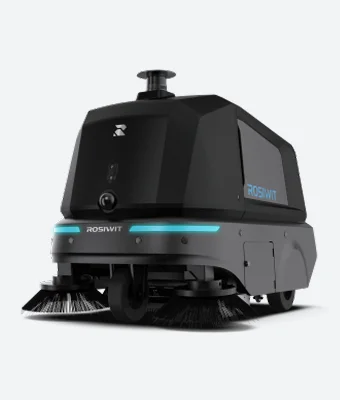
Modern industrial cleaning robots combine mechanical scrubbing with intelligent navigation. For example, Rosiwit’s Titan 810 integrates sweeping and scrubbing functions, helping remove debris and clean hard floors in a single operation.
By combining sweeping and scrubbing functions, the Titan 810 can handle different types of floor contaminants in a single operation. This integrated cleaning approach helps reduce the need for separate cleaning processes in large industrial environments. These capabilities support demanding cleaning requirements across large industrial environments.
Labor Efficiency and Operational Costs
Labor availability is another important factor for facility managers.
A conventional scrubber requires an employee to operate the machine throughout the cleaning process. For facilities with large floor areas or multiple cleaning shifts, this can increase labor requirements and make cleaning schedules more difficult to manage.
Industrial cleaning robots offer another approach. Once the environment has been mapped and cleaning tasks configured, they can perform autonomous operations while employees focus on other responsibilities.
This does not eliminate the need for cleaning personnel. Businesses still need staff for supervision, maintenance, exception handling, and other facility management tasks. However, automation can reduce the amount of direct labor required for repetitive floor-cleaning activities.
When comparing equipment, businesses should consider not only the purchase price but also labor expenses, maintenance costs, consumables, and equipment utilization over its service life.
Navigation and Adaptability in Complex Environments
Conventional scrubbers are generally straightforward to control, making them suitable for facilities with relatively simple cleaning requirements.
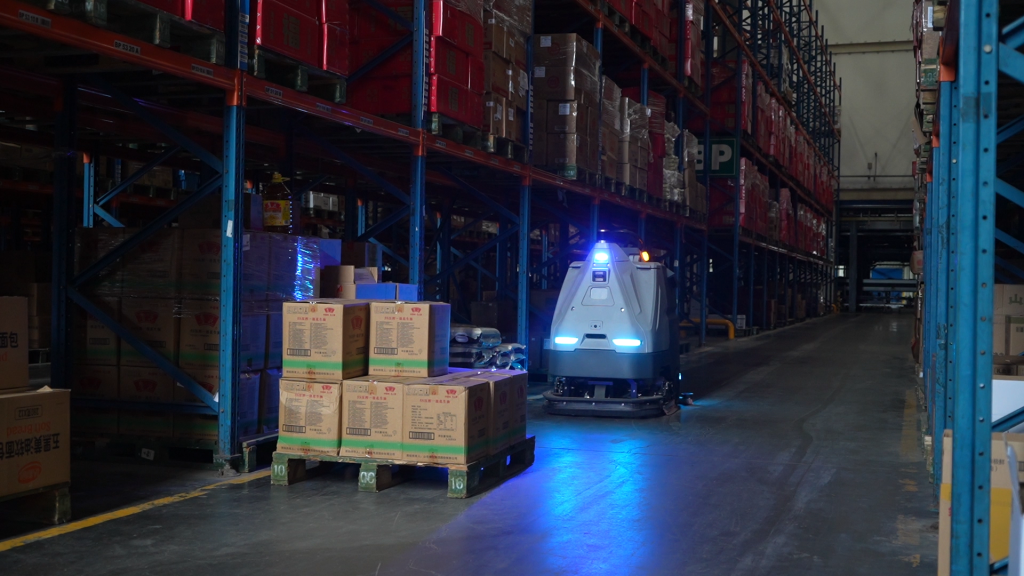
However, large warehouses and manufacturing facilities often contain forklifts, pallets, machinery, and moving personnel. Cleaning these environments requires careful route planning and awareness of surrounding activities.
Industrial cleaning robots use technologies such as LiDAR, mapping, and intelligent obstacle avoidance to navigate more independently.
The Titan 810 uses 3D LiDAR and AI-powered navigation to identify obstacles and plan cleaning routes. It is designed for industrial environments where equipment and personnel may move throughout the working area.
For businesses considering automation, it is important to evaluate aisle widths, floor conditions, slopes, traffic patterns, and access restrictions before deployment.
Why the Rosiwit Titan 810 Is Worth Considering
At Rosiwit, we develop intelligent cleaning solutions for commercial and industrial applications. Our Titan 810 combines heavy-duty mechanical cleaning with autonomous operation to address the requirements of large facilities.
Its key specifications include:
- Cleaning efficiency: Up to 5,200 m²/h.
- Working width: 810 mm.
- Runtime: Approximately 6.5 hours.
- Water tank capacity: 150 L solution tank and 190 L recovery tank.
- Brush down pressure: Up to 115 kg.
- Gradeability: 11°.
The machine also features a smart 5-in-1 workstation that integrates charging, water refilling, drainage, high-pressure jet cleaning, and cleaning solution mixing.
Through Rosiwit 365, facility managers can monitor cleaning operations and manage tasks through mobile devices or desktop systems.
These capabilities make Titan 810 suitable for warehouses, logistics centers, factories, and other large industrial facilities.
How to Choose the Right Cleaning Equipment
Neither equipment category is suitable for every business. Before making a purchasing decision, facility managers should consider several factors:
- Facility size: Smaller areas may not require autonomous equipment, while large facilities can benefit from automated cleaning.
- Floor conditions: Heavy dirt and stubborn stains require sufficient brush pressure and appropriate cleaning components.
- Labor availability: Businesses facing labor shortages may benefit from autonomous cleaning solutions.
- Working environment: Narrow aisles, moving vehicles, and complex layouts require suitable navigation capabilities.
- Long-term costs: Evaluate labor, maintenance, consumables, and equipment utilization rather than focusing only on initial investment.
Conclusion
A heavy duty floor scrubber remains a practical choice for businesses that need powerful floor cleaning with direct operator control. Industrial cleaning robots, meanwhile, offer greater automation and can help businesses manage repetitive cleaning tasks across large and complex facilities.
At Rosiwit, we combine cleaning performance, intelligent navigation, and digital management to support more efficient commercial and industrial cleaning operations. By evaluating actual facility requirements, businesses can choose equipment that delivers reliable cleaning results and supports long-term operational efficiency.