
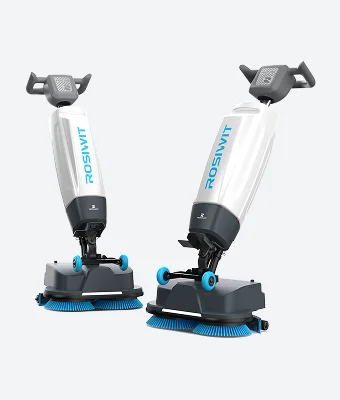
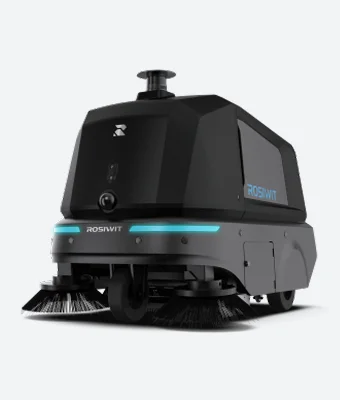

Modern commercial floor care is transitioning rapidly from manual labor toward higher automation levels. Facility executives evaluating equipment upgrades often weigh standard motorized floor scrubbers against fully self-navigating robotic floor cleaners to determine long-term operational efficiency.
Selecting an auto floor scrubber addresses fundamental cleaning needs, yet comparing these conventional machines with modern robotic floor cleaners reveals distinct differences in labor allocation, mapping efficiency, and spatial adaptability. At Rosiwit, we analyze these technological shifts to help operations managers optimize continuous facility maintenance workflows.
Operational Differences in Human Involvement
Conventional motorized scrubbers rely continuously on dedicated manual operators to steer, regulate fluid flow, and handle obstacles across every shift. Manual operation limits cleaning cycles strictly to available staff hours, introducing human error and potential operational delays during peak business hours. Machine operators must remain physically present during the entire scrubbing process, preventing facility managers from redeploying staff toward specialized maintenance tasks or high-touch surface sanitization.
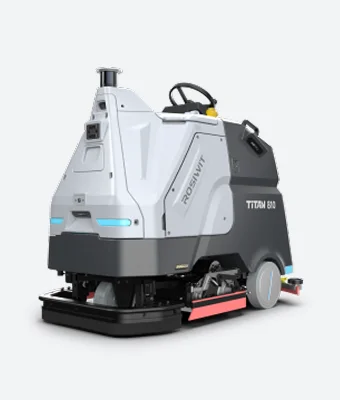
Deploying an autonomous robotic floor cleaner shifts human labor from direct machine operation to high-level supervisory management. This intelligent cleaning equipment executes programmed routes independently, operating during off-peak hours or overnight shifts without continuous human oversight. Reducing direct physical labor dependency allows maintenance teams to scale their daily coverage while maintaining consistent cleaning quality across sprawling commercial properties.
Sensor Technology and Multi-Modal Spatial Perception
Sensory technology distinguishes basic mechanized sweepers from fully intelligent floor maintenance robotic cleaners. Traditional machinery relies on basic mechanical bumpers or simple physical switches to detect physical barriers, offering zero predictive hazard recognition. When encountering tight corridors or dynamic clutter, manual equipment requires immediate operator intervention to alter course, causing potential bottlenecks in busy operational environments.
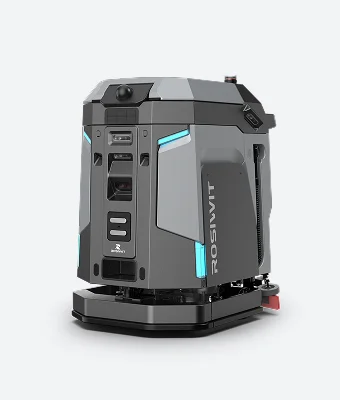
Advanced self-navigating robotic floor cleaners incorporate AI-integrated perception to scan physical environments continuously in three dimensions. Through the integration of 3D LiDAR, RGB-D vision, and ultrasonic sensing, these intelligent cleaning devices perceive complex surroundings with high fidelity. The Skywalker GT robotic floor cleaner uses this multi-sensor framework to detect subtle environmental shifts, maintaining steady spatial awareness across dynamic commercial layouts.
Hazard Mitigation and Multi-Layer Safety Engineering
Navigating shared public environments demands physical safety protocols that protect pedestrians, structural fixtures, and cleaning equipment simultaneously. Basic floor scrubbers rely entirely on operator reflexes to avoid sudden drop-offs, collisions, or tight hazards. Human fatigue during lengthy shifts increases collision risks in busy corridors, potentially creating liability concerns or causing unexpected equipment repairs.
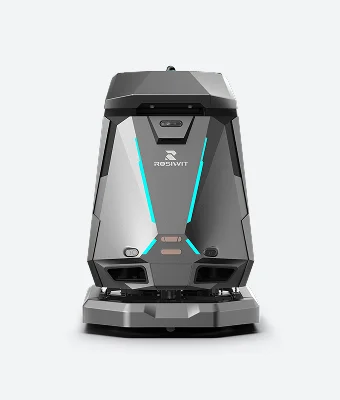
Robotic floor cleaners integrate physical and optical safeguards to handle dynamic real-world hazards safely. Comprehensive safety suites feature precise positioning, path planning, obstacle avoidance, anti-drop protection, emergency stop, and safety bumpers. Deploying a reliable autonomous cleaning robot with these overlapping safeguards prevents accidental falls down stairwells or loading ramps, giving operators full confidence during unsupervised overnight operations.
Dynamic Obstacle Detection Capabilities
High-traffic facilities present constantly changing obstacles, ranging from low-profile pallets to hanging signage and moving pedestrians. Traditional motorized machinery cannot adapt to changing layouts automatically, requiring manual rerouting whenever path obstructions occur. Operator intervention adds continuous overhead, slowing down overall square-footage throughput in dynamic commercial facilities.
Modern intelligent software enables robotic floor cleaners to process complex visual data dynamically. Through advanced perception algorithms, the Skywalker GT robotic floor cleaner can precisely identify suspended, low-lying, and moving obstacles. Identifying these varied obstacle heights in real time allows the intelligent cleaning equipment to navigate around dynamic barriers cleanly without stopping active cleaning runs.
Route Efficiency and Path Planning Precision
Manual floor cleaning often results in overlapping passes or missed sections due to operator variance and fatigue. Inconsistent travel speeds alter solution deployment, leaving excess water or uncleaned patches across expansive floor surfaces. Over time, these operational inconsistencies increase water and chemical consumption while accelerating mechanical brush wear unnecessarily.
Algorithmic navigation transforms coverage efficiency by generating systematic, non-repetitive cleaning grids. Investing in a smart robotic floor cleaner with smart navigation promotes even brush pressure and synchronized fluid dispensing across every square meter. Automated path optimization reduces energy consumption and maximizes battery life, maintaining predictable floor appearance across large commercial footprints.
Labor Deployment and Operational Cost Structure
Capital expenditure decisions require analyzing long-term operational costs alongside initial machinery purchases. Traditional manual floor care platforms carry lower upfront acquisition costs but generate continuous, recurring labor expenditures over their lifespan. Operations managers must factor in training costs, turnover rates, and hourly wage inflation when calculating the total cost of ownership for conventional cleaning equipment.
Integrating an autonomous robotic floor cleaner restructures facility budgets by substituting ongoing manual labor hours with predictable automated utility. While initial hardware investments are higher, robotic cleaning equipment delivers consistent operational output and enables round-the-clock shift schedules. Long-term labor savings offset initial equipment costs, providing facility directors with transparent financial predictability over extended operational lifespans.
Fluid Management and Mechanical Cleaning Dynamics
Mechanical scrubbing performance relies on balanced brush deck pressure, torque delivery, and regulated water distribution. Standard motorized scrubbers require manual adjustments to match surface friction, often resulting in over-wetting or inadequate grime extraction. Imbalanced fluid recovery leaves dangerous damp spots that create slip hazards for facility visitors and employees.
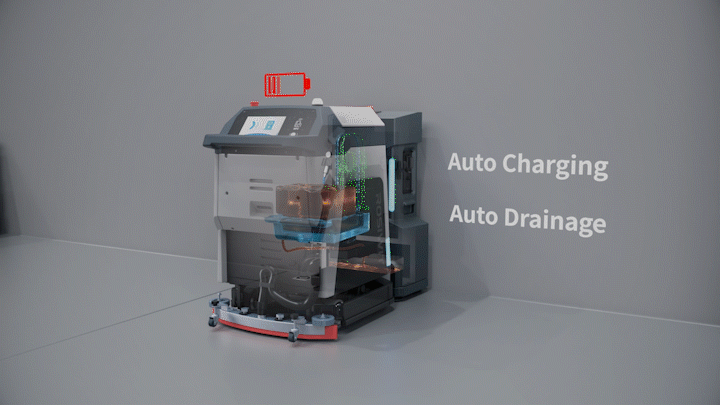
Intelligent robotic floor cleaners monitor fluid deployment continuously to optimize chemical usage and accelerate floor drying times. Choosing a modern auto floor scrubber equipped with variable flow controls prevents excess moisture accumulation on high-traffic walkways. Robust vacuum recovery systems pull extracted slurry into dedicated holding tanks, keeping walking surfaces dry and clean throughout active operations.
Facility Analytics and Fleet Integration
Data visibility represents a major distinction between legacy floor care tools and modern automated fleets. Traditional mechanical scrubbers operate without digital telemetry, leaving facility managers without clear records of clean square footage or daily operational duration. Lack of performance metrics complicates resource planning and prevents accurate service verification.
Cloud-connected robotic floor cleaners transform maintenance management by delivering real-time telemetry and detailed performance analytics. Deploying an auto floor scrubber equipped with digital fleet tracking provides clear operational logs, consumption reports, and maintenance alerts. Centralized data management allows facility directors to track resource utilization, verify service delivery, and streamline multi-site maintenance schedules effortlessly.
Core Comparison & Practical Selection Guidance
The choice between traditional motorized floor scrubbers and intelligent autonomous robotic floor cleaners hinges on a facility’s operational scale, staffing conditions, and long-term efficiency goals.
Conventional mechanized cleaning equipment suits small-scale, staff-dependent cleaning scenarios with low operational flexibility requirements, featuring low upfront costs but persistent labor reliance, inconsistent cleaning results, and zero data-driven management capabilities.
In contrast, Rosiwit autonomous robotic floor cleaners deliver inherent advantages in intelligent navigation, dynamic hazard avoidance, unmanned round-the-clock operation, precise fluid and mechanical cleaning control, and cloud-based fleet analytics.
These integrated strengths eliminate manual operational errors, cut long-term labor and maintenance costs, and deliver standardized, verifiable floor care results for complex, high-traffic commercial and industrial spaces. Committed to intelligent cleaning technology innovation, we at Rosiwit empower facility managers to upgrade traditional floor care workflows with reliable, efficient, and fully data-backed robotic cleaning solutions.