

Reliable floor cleaning is indispensable for facility safety, operational continuity, and long-term site management optimization. As a company working closely with global B2B clients, we at Rosiwit often receive a common question from procurement teams and facility managers: should they choose an autonomous cleaning robot or an automatic floor cleaning machine for their operations?
The answer depends on operational complexity, navigation requirements, and long-term efficiency goals. In this article, we share our perspective based on real deployment experience across logistics centers, retail facilities, hospitals, and industrial environments.
How We Define an Autonomous Cleaning Robot
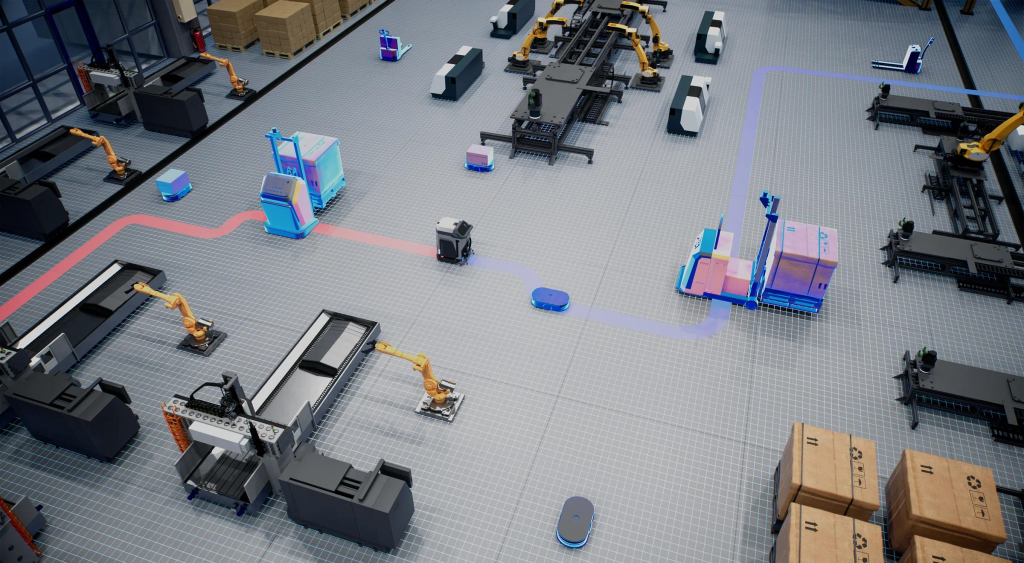
From our experience, an autonomous cleaning robot is not just automated equipment—it is an intelligent cleaning system capable of independent decision-making in real operational environments. It can navigate complex spaces, adjust cleaning paths dynamically, and operate without continuous human intervention.
At Rosiwit, our focus is on building systems that perform reliably in commercial and industrial scenarios where environments are constantly changing. An autonomous cleaning robot must be able to handle obstacles, optimize routes, and maintain stable cleaning performance even in high-traffic conditions such as warehouses, shopping centers, and transportation hubs.
This level of intelligence is essential for enterprises that prioritize operational efficiency and labor optimization.
What We Mean by Automatic Floor Cleaning Machine
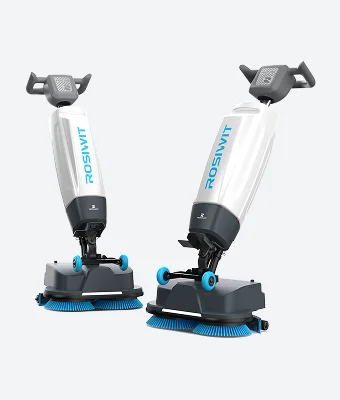
In contrast, an automatic floor cleaning machine generally refers to equipment that operates with partial automation but still relies heavily on human supervision. It may follow predefined routes or require manual adjustments depending on environmental changes.
In structured environments such as small commercial spaces or controlled indoor layouts, an automatic floor cleaning machine can still perform effectively. However, when deployed in large-scale or dynamic environments, its limitations in navigation and adaptability become more apparent.
From our project experience at Rosiwit, this is often the key reason why many enterprises eventually transition to more autonomous systems.
Key Differences Based on Our Deployment Experience
When comparing an autonomous cleaning robot and an automatic floor cleaning machine, we focus on three core dimensions: navigation capability, operational flexibility, and scalability.
An autonomous system can independently map environments, detect obstacles, and optimize cleaning routes in real time. This makes it highly suitable for industrial and commercial environments with complex layouts and frequent movement.
On the other hand, an automatic system typically performs best in predictable environments. Once conditions change—such as warehouse restructuring or increased pedestrian flow—efficiency may decrease, requiring additional human intervention.
From a B2B perspective, this difference directly impacts long-term labor costs, deployment efficiency, and maintenance workload.
How We Apply These Technologies in Real Products
At Rosiwit, we design our solutions specifically for industrial and commercial scenarios where reliability, efficiency, and navigation performance are essential.
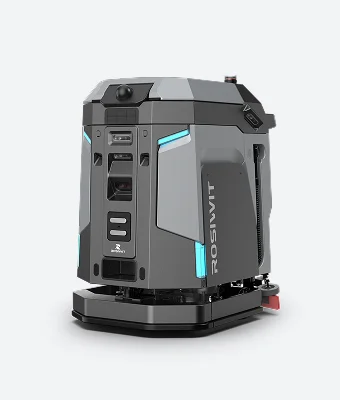
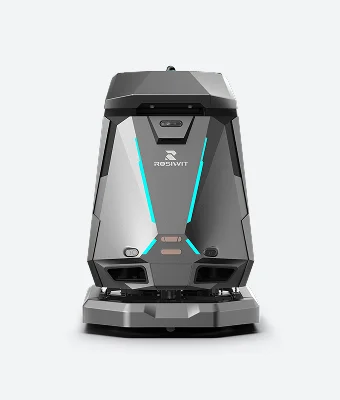
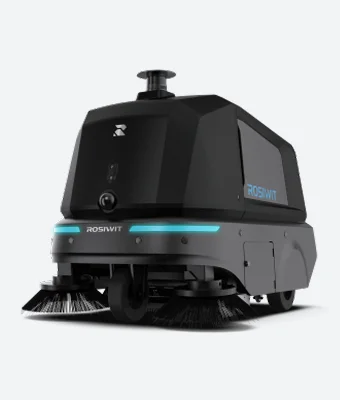
Built on a 48V hardware platform, our Skywalker GT is engineered to adapt to a wide range of environments, including retail stores, hospitals, educational campuses, transportation hubs, and industrial facilities. Equipped with an advanced autonomous navigation system and six-layer safety protection, it can operate stably in complex and high-traffic spaces while avoiding obstacles and optimizing cleaning routes in real time.
In practical deployment, Skywalker GT delivers long-endurance operation, low-noise performance, and consistent cleaning efficiency, making it highly suitable for daily commercial use. Its intelligent operational capabilities help reduce manual workload while improving cleaning consistency and overall facility management efficiency. Through solutions like Skywalker GT, we at Rosiwit continue to apply intelligent robotics technology to solve real-world commercial and industrial cleaning challenges.
Operational Efficiency and Deployment Perspective
One of the key advantages of an autonomous cleaning robot is deployment efficiency. In many of our projects, these systems can be quickly mapped and integrated into existing facility workflows with minimal disruption.
In contrast, an automatic floor cleaning machine often requires more manual configuration and supervision, especially in complex environments. This increases long-term operational workload and limits scalability for multi-site enterprises.
For businesses managing large facilities or distributed operations, deployment speed and system adaptability are critical decision factors.
How We Help Customers Choose the Right Solution
At Rosiwit, we always evaluate customer needs based on real operational conditions rather than theoretical specifications. If a facility has structured layouts and limited traffic variation, an automatic system may still be sufficient.
However, for large-scale industrial environments, logistics centers, or high-traffic commercial facilities, we generally recommend an autonomous cleaning robot due to its stronger navigation capability and higher adaptability.
In many cases, our clients initially use an automatic floor cleaning machine but later upgrade as operational complexity increases and efficiency requirements become more demanding.
Conclusion from Our Perspective
From our experience working across global B2B industries, the difference between an autonomous cleaning robot and an automatic floor cleaning machine is fundamentally about intelligence and adaptability.
Autonomous systems provide stronger navigation capability, better scalability, and significantly improved operational efficiency in complex environments. Automatic systems, while still useful in structured settings, are more limited in dynamic commercial applications.
At Rosiwit, we continue to focus on developing intelligent cleaning solutions that help enterprises improve efficiency, reduce operational costs, and adapt to increasingly complex industrial environments. Our goal is not just to provide equipment, but to deliver reliable long-term cleaning automation strategies for modern businesses.