
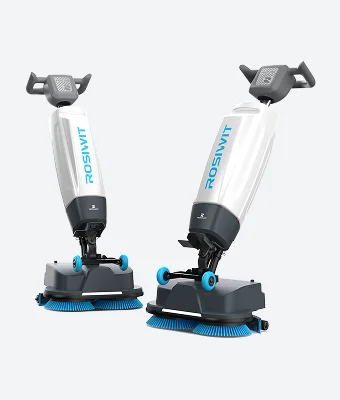
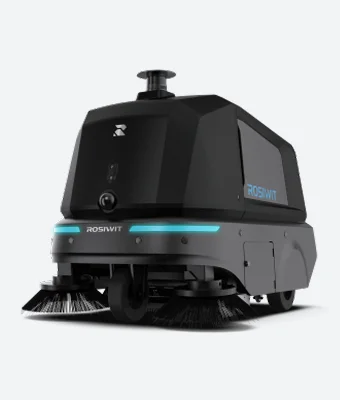

Upgrading commercial floor care from manual methods to automated platforms represents a major shift in operational planning and asset management. Facilities looking to optimize labor allocation and floor longevity turn to automated equipment to build consistent, verifiable sanitization routines across varied surface materials.
Integrating an autonomous cleaning robot allows operational leaders to maintain spotless environments without expanding direct labor overhead across busy property portfolios.
Data Visibility and Performance Transparency
Traditional manual scrubbing offers minimal visibility into actual cleaning completion rates or resource consumption patterns across large properties. Operating an autonomous floor scrubber provides supervisors with real-time operational telemetry, tracking exact square footage, active cleaning durations, and water usage metrics. Cloud dashboards consolidate raw performance data, transforming daily sanitization tasks into measurable, verifiable service logs across distributed real estate footprints.
Comprehensive data logs allow operations teams to identify bottlenecked corridors, optimize cleaning schedules, and adjust maintenance frequency based on real-time foot traffic trends. Digital oversight verifies that surface care standards remain uniform across every zone without requiring constant manual floor inspections. Actionable analytics give facility executives full financial and operational transparency over daily sanitation workflows.
Mechanical Deck Engineering and Agitation Power
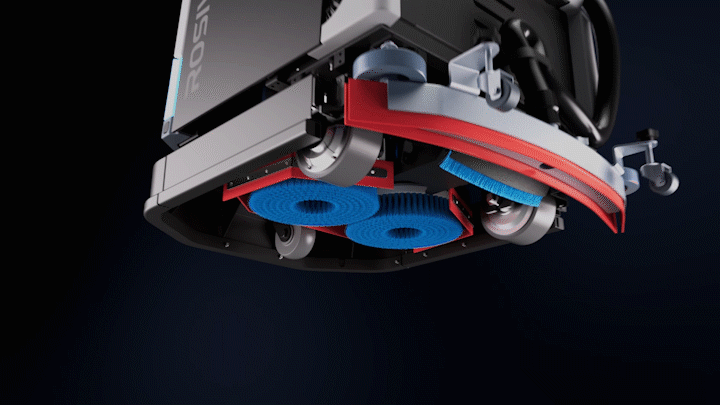
Removing embedded grime and footwear scuffs from porous commercial tiles requires consistent mechanical brush force rather than surface-level wiping. Lightweight automated platforms often struggle on stubborn stains because they lack sufficient downward pressure and brush torque. Heavy-duty deck assemblies maintain steady mechanical contact across varied floor textures, breaking up embedded dirt cleanly during initial passes.
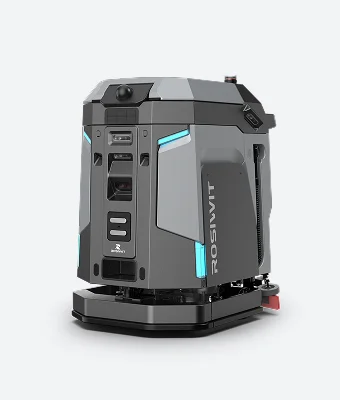
Dynamic deck pressure controls allow equipment to adjust scrubbing intensity based on surface material and soil levels. The Skywalker-GT addresses tough floor grime effectively by delivering 33kg down pressure for superior performance across demanding commercial settings. High down pressure maximizes stain removal efficiency while minimizing the need for heavy chemical detergent applications.
Spatial Perception in Dynamic Public Spaces
Operating automated equipment in busy public facilities requires sophisticated spatial awareness to ensure pedestrian safety and prevent route pauses. Multi-sensor fusion suites combine 3D LiDAR, optical vision cameras, and ultrasonic sensors to create continuous three-dimensional maps of dynamic floor environments. Multi-layered perception prevents collisions with low-profile obstacles, glass partitions, and sudden pedestrian movements.
Advanced perception algorithms enable equipment to distinguish between permanent structural columns and temporary spatial barriers like luggage or mobile displays. When dynamic obstacles appear in designated travel lanes, onboard systems recalculate clean pathways instantly without halting active operations. Comprehensive spatial awareness enables seamless human-robot co-existence across high-traffic public facilities.
Unsupervised Shift Execution and Labor Efficiency
Integrating autonomous technology restructures daily maintenance workflows by shifting human personnel from manual steering duties to specialized sanitization tasks. Utilizing an autonomous cleaning robot enables facility teams to schedule heavy floor scrubbing during off-peak hours or overnight maintenance windows without direct supervision. Automated shift execution ensures floor care remains consistent regardless of staffing shortages or shift turnovers.
Self-navigating machinery completes full floor cycles quietly and systematically, leaving surfaces dry and clean before daily building occupants arrive. Autonomous operation reduces physical strain on maintenance personnel while scaling daily square-footage throughput across broad building footprints. Strategic labor redeployment improves overall operational output while preserving high facility presentation standards.
Environmental Mapping and Spatial Precision
Navigating complex architectural layouts containing tight corridors, elevator banks, and broad atriums demands high-precision mapping software. Advanced SLAM navigation algorithms construct detailed spatial boundaries, allowing an autonomous floor scrubber to trim edges cleanly around fixtures and walls. High-precision mapping eliminates uncleaned perimeter zones and prevents repetitive passes over pristine surfaces.
Dynamic map management tools allow operators to establish restricted zones, virtual walls, and priority cleaning paths effortlessly via digital controls. Updating route parameters on demand ensures hardware adapts instantly whenever facility layouts change or seasonal inventory displays rearrange. Flexible route configuration keeps automated cleaning aligned with dynamic property operations.
Acoustic Control and Unobtrusive Daytime Operations
Maintaining quiet indoor acoustics represents a vital requirement when deploying automated maintenance machinery in healthcare, office, or hospitality settings. Operating specialized commercial machinery during regular business hours demands low-decibel vacuum motors and sound-insulated chassis enclosures. Silent operation enables facilities to maintain clean floors throughout daytime hours without disrupting administrative personnel, hospital patients, or hotel guests.
Optimized airflow paths pull extracted wastewater efficiently while keeping mechanical noise down to comfortable ambient levels. Deploying a silent autonomous cleaning robot enables continuous spot cleaning and spill response in high-traffic zones during peak operational hours. Unobtrusive floor care protects facility presentation without compromising occupant comfort.
Workstation Integration and Automated Maintenance
Achieving true operational independence across extensive commercial properties involves automating daily equipment maintenance alongside active floor scrubbing. Integrated docking stations manage wastewater extraction, fresh water replenishment, and battery charging within a single compact footprint. Self-servicing capabilities allow autonomous equipment to run multiple shifts back-to-back without requiring manual operator intervention.
Automated servicing alignment uses precision positioning sensors to make secure mechanical and fluid connections every time. Streamlining daily maintenance tasks reduces physical servicing downtime and protects internal components against manual handling errors. Fully automated servicing hubs turn standalone machinery into reliable, round-the-clock maintenance assets.
Long-Term Asset Protection and Material Care
Inconsistent floor care and incorrect chemical usage accelerate surface wear, leading to premature floor replacement costs in commercial buildings. Automated scrubbing platforms regulate water deployment and detergent dosing precisely, protecting delicate polished stone, epoxy, and vinyl flooring against chemical damage or excess moisture accumulation. Controlled liquid extraction ensures floors dry rapidly, reducing slip hazards for pedestrian foot traffic.
Maintaining uniform brush pressure prevents uneven floor wear, extending the functional lifespan of costly architectural floor materials. Systematic floor maintenance preserves reflective coatings and material integrity across long operating lifespans. Protecting physical flooring assets delivers measurable long-term financial savings to property owners and facility managers.
Value Landing & Customized Solution Cooperation
Switching to robotic floor sanitation reshapes facility maintenance rather than merely updating cleaning hardware. Traditional scrubbing struggles to balance uniform cleanliness, cost control, data traceability and floor protection all at once.
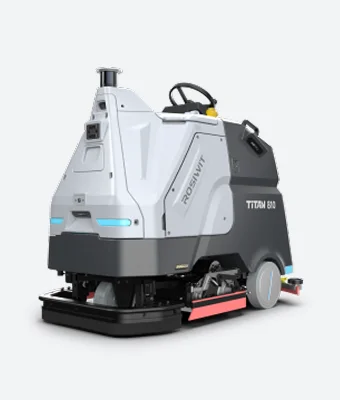
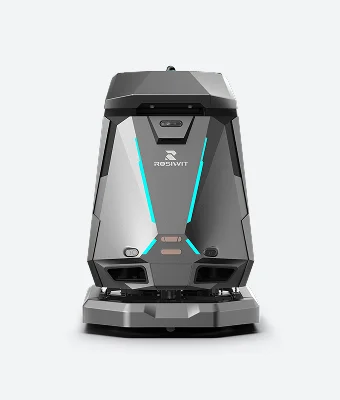
Rosiwit Skywalker-GT unites powerful scrubbing performance, multi-sensor safety navigation, auto-docking autonomy and cloud data management to resolve these pain points for offices, hospitals, warehouses and hotels.
The robot delivers steady cleaning results, curbs labor spending, safeguards flooring assets and generates verifiable service records. Reach out to Rosiwit for tailored autonomous floor care solutions to build lean, stable, data-driven smart facility operations.